Accelerating "Destroy": The Tools and Culture of Predictive Process Control

June 29, 2026
Kelsey Kotecki

If you have been following our series on Listeria control, you're likely aware of the value in having a "Seek and Destroy" plan in place, and your team understands the critical difference between validating a cleaning procedure and merely verifying it.

But as a Food Safety & Quality Specialist who is often inside different processing plants, I see facilities hit a wall at this exact stage. Even the most sophisticated environmental monitoring strategy on paper means nothing if you lack rapid feedback, digital data tracking, and a frontline team empowered to take action.

In this installment, we explore the modern tools and the food safety culture required to permanently eradicate harborage sites and turn your facility into a predictive powerhouse.

Sampling to Validate and Verify

Nelson-Jameson, Neogen, and Dr. Martin Wiedmann of Cornell University dive into what it takes to upgrade your facility's Listeria control program.
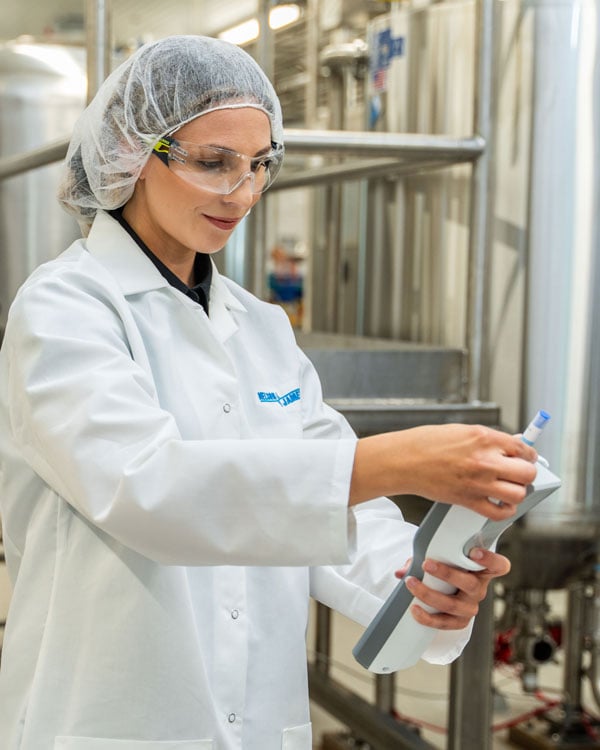
Jordyn-Warosh-inserting-test-swab-into-the-Neogen-LM1-Luminometer_WEB-1

Rapid Hygiene Verification: Accelerating the "Destroy" Phase

Finding a hidden growth niche is only half the battle; eliminating that risk requires speed. If your testing turnaround times are too slow, your facility risks operating in the dark. Today, high-performing programs treat sampling as an immediate control process. At Nelson-Jameson, we consistently recommend utilizing Neogen rapid testing technologies to accelerate your team's decision-making:

  • Neogen Clean-Trace® ATP: Providing results in under 10 seconds, ATP testing acts as an immediate check of cleaning effectiveness before chemical sanitizers are applied. It allows your frontline teams to see the impact of their actions in real-time and quickly re-clean if a surface fails.
  • Neogen Listeria Right Now™: This is a powerful troubleshooting tool that delivers environmental Listeria results in just one hour without the need for enrichment. This allows your QA teams to verify sanitation and mitigate risks within the same shift, before production even begins.
  • Neogen Molecular Detection System (MDS): For highly specific rapid pathogen verification, the MDS assay has reduced traditional multi-day culture wait times down to an 24 to 26-hour turnaround, acting as the gold standard for rapid environmental testing.

The Data Transparency Push

Relying on paper binders or isolated spreadsheets to track your environmental testing is obsolete. As the regulators push for greater data transparency, industry-leading facilities are integrating their test results with Laboratory Information Management Systems (LIMS).

By utilizing platforms like Neogen® Analytics software, QA managers can move beyond flat spreadsheets to generate digital floor plan "heat maps". This level of digital transparency allows you to visually track Listeria or indicator organism hits by zone, immediately spot developing trends, and shift your operations from reactive swabbing to true predictive process control.

Root Cause Analysis (RCA) vs. "Firefighting"

When a positive swab result occurs, a common mistake we see in the industry is "firefighting"—pouring a highly concentrated sanitizer on the affected area, achieving a negative re-swab, and convincing yourself the problem is solved. In reality, this approach doesn't destroy the niche; it simply hides the pathogen for a few weeks until it inevitably returns.

True eradication requires a formal Root Cause Analysis. By using frameworks like the "5 Whys" in combination with Fishbone diagrams, you can drill down to the actual source of the problem. Often, this reveals that the root cause isn't a failure of the sanitation crew, but rather an issue with Sanitary Design 2.0—requiring you to actively retrofit or replace legacy equipment that acts as a pathogen reservoir.

Building a "You See It, You Own It" Culture

Sophisticated tools and data tracking only work when placed in the hands of a properly trained team. A mature food safety culture treats training as a preventive control. It involves removing quotas that disincentivize finding positive swabs and instead empowering your frontline staff with a "you see it, you own it" mentality. When your employees notice a cracked floor mat, a leaking valve, or a piece of equipment missing from the master sanitation schedule, they must feel empowered to speak up, report the harborage site, and ensure it gets fixed.


Start Building Your Program Today

Upgrading your environmental monitoring program doesn't have to be a solo effort. At Nelson-Jameson, every single one of our current specialists comes directly from the food industry. We have walked in your boots, faced the exact same challenges you face, and know exactly what works across diverse processing environments—from dairy and snacks to lettuce and fish.

Whether you need a fresh, objective site assessment to refine your hygienic zoning or want to equip your team with hands-on training at one of our complimentary Neogen® Petrifilm® Certification Workshops, we are here to help you get started.

Kelsey Kotecki

Food Safety & Quality Specialist

Kelsey is a Food Safety & Quality Specialist, guiding customers in lab operations, equipment selection, testing, and more.

Recent posts

Food Safety

June 29, 2026

Validation vs Verification: The Science of "Seek & Destroy"

When facilities attempt to tackle Listeria contamination, they often rely on Environmental Monitoring Pr...

Food Safety

June 25, 2026

Transforming Dairy Quality Control with In-Line Spectroscopy

For food manufacturers, a lapse in process control can initiate a domino effect. It can lead to product ...

Ingredients

June 11, 2026

A Guide to Peppers: How Food Manufacturers Can Bring Out Flavor Behind the Heat

Consumers are chasing authentic pepper flavors that offer depth, not just a sting. Cheese is the perfect...

Related resources

Training
Aseptic Sampling Collection Training

Aseptic Sampling Collection Training

QualiTru Sampling Systems provides a training program focused on aseptic sampling, designed to teach individuals how to effectively collect samples using QualiTru equipment. The program emphasizes the significance of aseptic sampling and covers essential topics, including proper usage of QualiTru sampling equipment, techniques for collecting representative samples, methods to prevent contamination, and troubleshooting common issues. QualiTru offers various training options, such as on-site training, webinars, and online resources. Their website features a library of training videos and materials covering a wide range of topics related to aseptic sampling. Additionally, they provide customized training programs tailored to meet your specific needs.

Food Safety, Laboratory

Assessment
Training
Color-Coded Training & Site Assessment

Color-Coded Training & Site Assessment

Recognize and address possible hygiene and sanitation challenges based on the cleaning and material handling equipment available in your facility.

Through a discovery call, virtual, or on-site assessment, Vikan SQF Practitioner certified specialists will assist in confirming that your system and cleaning tool inventory aligns with your risk management objectives while pinpointing any missing tools and enhancing maintenance and usage practices. Evaluate whether your existing tools are utilized in the most effective manner, or determine if a more suitable tool exists for the task at hand. Ensure that your tools comply with all relevant standards and regulatory requirements. Site evaluations encompass a summary survey, an overview of the location, a color-coded factory layout plan, product suggestions, a recommended order form, and a proposal for a follow-up survey.


Food Safety, Sanitation, Cleaning Tools, Color Coding
Program Catalog
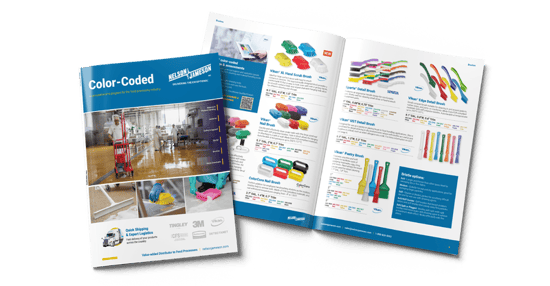
Color-coded Program Catalog

Color-coded Program Catalog

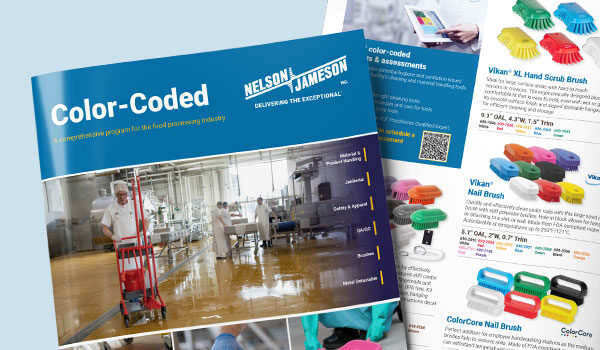
This is a comprehensive program for the food processing industry. Nelson-Jameson brings together the most extensive collection of color-coded products for material handling, product handling, janitorial, safety, apparel, QA/QC, and metal-detectable applications. With the right pieces, a color-coding system is a powerful tool in preventing cross-contamination of allergens and food-borne illnesses that can lead to sickness or expensive product recalls.

Color-Coded-Catalog_Open-Magazine-Mockup-1-1

Food Safety, Sanitation, Cleaning Tools, Color Coding

Workshop
Neogen® Petrifilm® Certification Workshop

Neogen® Petrifilm® Certification Workshop

Get Petrifilm Certified through our complimentary immersive workshop for managers, personnel, and teams. The workshop offers practical knowledge through hands-on training and networking with industry professionals and experts. Attendees gain an in-depth understanding of Petrifilm technology and valuable insights into effective environmental monitoring practices.  Participants leave with a certification and a wealth of resources that can significantly contribute to elevating their plant's quality control standards.

Food Safety, Sanitation, Laboratory