

Pathogen defense plans traditionally concentrate capital and operational resources on direct product-contact surfaces in high-throughput food and dairy processing facilities. However, floor sanitation is frequently treated as a secondary environmental concern or an operational afterthought. As regulatory audits under the Food Safety Modernization Act (FSMA) mandates and Global Food Safety Initiative (GFSI) benchmarked standards demand increasingly rigorous environmental monitoring, plant floors must be formally re-evaluated as primary vectors for cross-contamination.
Treating the processing floor as a passive zone ignores the complex dynamics of modern manufacturing, where moisture, heavy wheel traffic, and foot movement continuously mobilize floor-level soils and microorganisms into high-care sanitary zones.
Movement across processing zones creates a continuous systemic risk to batch Purity and Environmental Hygiene. Personnel, contractors, and material-handling equipment frequently cross environmental boundaries, transporting organic loads and environmental pathogens from raw receiving areas directly into post-pasteurization corridors. Environmental monitoring programs routinely detect floor harborage of resilient pathogens—most notably Listeria monocytogenes, which thrives in cold, damp processing environments, and Salmonella, a persistent threat across raw material and dry transition zones.
Relying on passive floor sanitizing protocols, such as boot wash stations or footbaths that quickly dilute and degrade, fails to contain traffic-driven microbial transfer. To align with 2027 regulatory expectations, food safety leaders must establish floor sanitation as a formal Critical Control Point by deploying engineered physical barriers that actively arrest the mechanical migration of pathogens. This structural shift requires moving away from legacy floor protection models that physically break down under real-world processing conditions.
A comprehensive evaluation of your current inventory of boots and rainwear, analyzing each product with insights from industry professionals.
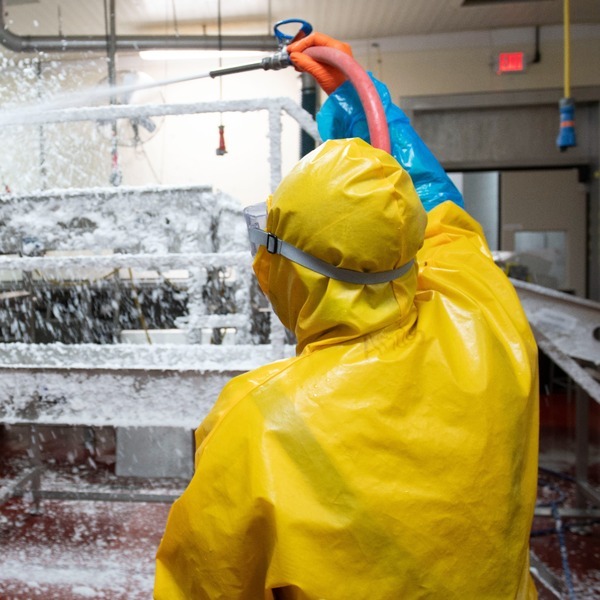
Legacy foot protection solutions—most notably spunbond polypropylene shoe covers—were originally engineered for dry cleanrooms or healthcare settings and prove wholly inadequate on damp, oily, or fat-heavy food manufacturing floors. In high-care dairy, meat, and ready-to-eat (RTE) facilities, standard non-woven covers quickly saturate, shred, and lose physical integrity upon exposure to standing water and organic soils. Furthermore, unshielded primary boots and low-grade covers rapidly degrade when exposed to aggressive chemical washdown agents—such as peracetic acid, quaternary ammonium compounds, and heavy-duty caustic cleaners—as well as stubborn processing fats like tallow and butterfat. When protective materials fail, footwear transforms from a hygienic safeguard into a primary vector for cross-contamination, exposing facilities to unacceptable regulatory non-compliance and catastrophic batch safety failures. Establishing true floor-level hazard control requires replacing permeable legacy materials with engineered elastomeric physical barriers specifically designed to withstand aggressive food-plant chemistry.
|
Parameter/Environment Condition |
Standard Spunbond Polypropylene |
Tingley Boot Saver® Natural Rubber Latex |
|
Wet/Damp Floor Resistance |
Permeable material; quickly saturates, absorbs liquid, and loses structural integrity. |
Impermeable liquid barrier; completely blocks fluid penetration and liquid-borne pathogens. |
|
Fat, Grease & Chemical Resistance |
Degrades rapidly upon contact with processing fats (tallow, butterfat) and washdown chemicals. |
Formulated to resist aggressive processing chemicals (peracetic acid, quats) and animal fats/oils. |
|
Tensile Stretch & Fit Elasticity |
Non-elastic or minimally elastic; highly prone to tearing during donning or aggressive stride. |
High-elasticity natural rubber latex; stretches effortlessly over bulky primary boots for a snug fit. |
|
Barrier Permeability & Sealing |
Porous non-woven matrix allows micro-particulate, liquid, and pathogen transfer. |
Continuous, seamless elastomeric barrier encapsulating primary footwear at the sole and upper. |
The Tingley Boot Saver addresses these material vulnerabilities through advanced rubber latex engineering, representing decades of specialized elastomeric molding expertise. Formulated from premium natural rubber latex, the Boot Saver stretches effortlessly over primary industrial footwear to create a snug, continuous, liquid-proof skin. This specialized natural rubber compound actively resists degradation from harsh sanitizing chemicals, caustic washdown agents, and heavy organic fats, maintaining full structural integrity across demanding shifts.
By establishing an impermeable seal around primary boots, the Boot Saver prevents liquid and microbial transfer while extending the operating life of underlying safety footwear. This combination of high tensile elasticity, chemical resilience, and continuous physical encapsulation provides a reliable foundation for operationalizing visual compliance protocols across facility zones.
Physical barrier integrity delivers maximum risk reduction when paired with clear visual enforcers that eliminate human error at sanitary zone boundaries. Integrating color-coded Personal Protective Equipment into facility Hazard Analysis and Critical Control Points (HACCP) plans transforms subjective hygiene guidelines into an immediate, objective visual auditing system. By aligning footwear protection with established plant-wide color-coding protocols, facility managers simplify regulatory audit verification under FSMA guidelines and empower line employees to enforce zone boundaries instantaneously.
Operationalizing sanitary zone segregation requires establishing dedicated barrier workflows across facility lines:
This visual segregation framework provides clear operational oversight for quality assurance teams and plant floor supervisors alike. Establishing immediate visual verification streamlines daily audit readiness while building a verifiable defense against environmental cross-contamination.

Tingley is an industry leader in footwear and outerwear, motivated to provide safety gear that works as hard as you do.
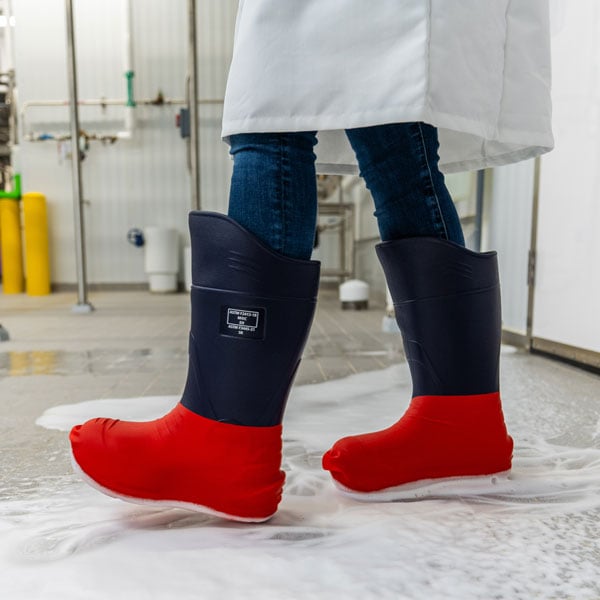
Integrating advanced disposable rubber boot covers into a facility’s HACCP or FSMA preventive control framework converts floor sanitation from an unmonitored exposure point into a documented, repeatable defense line.
Nelson-Jameson’s specialized account managers assist QA and EHS leadership in executing plant-wide hazard assessments to identify high-risk traffic zones, evaluate chemical exposure profiles, and optimize PPE dispensing. For QA/QC directors and food safety managers aiming to strengthen audit posture and minimize environmental contamination, implementation follows a three-step operational roadmap:
By establishing high-performance physical barriers and clear visual controls at every zone boundary, processing facilities achieve elevated compliance and verifiable cross-contamination control. Nelson-Jameson and Tingley remain dedicated to supplying expert-curated safety solutions and advanced PPE that elevate food safety standards across the processing industry.

November 13, 2026
Managing wastewater in food, dairy, and beverage processing is a complex challenge. High biological oxyg...

October 29, 2026
Choosing the right starter culture system depends on balancing your food manufacturing facility's labor,...
October 28, 2026
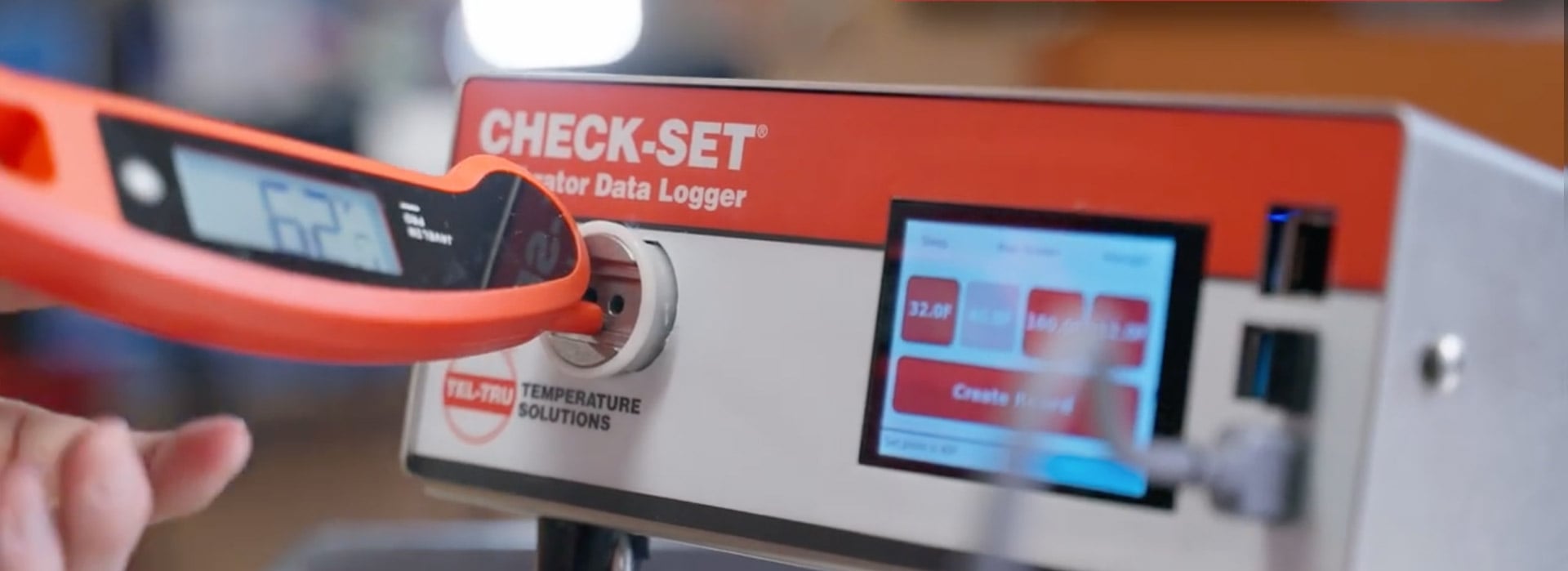
How much is your current thermometer verification process really costing your facility? Ice baths and bo...