
A Step-by-Step Technical Guide to Precision Sizing and Identification
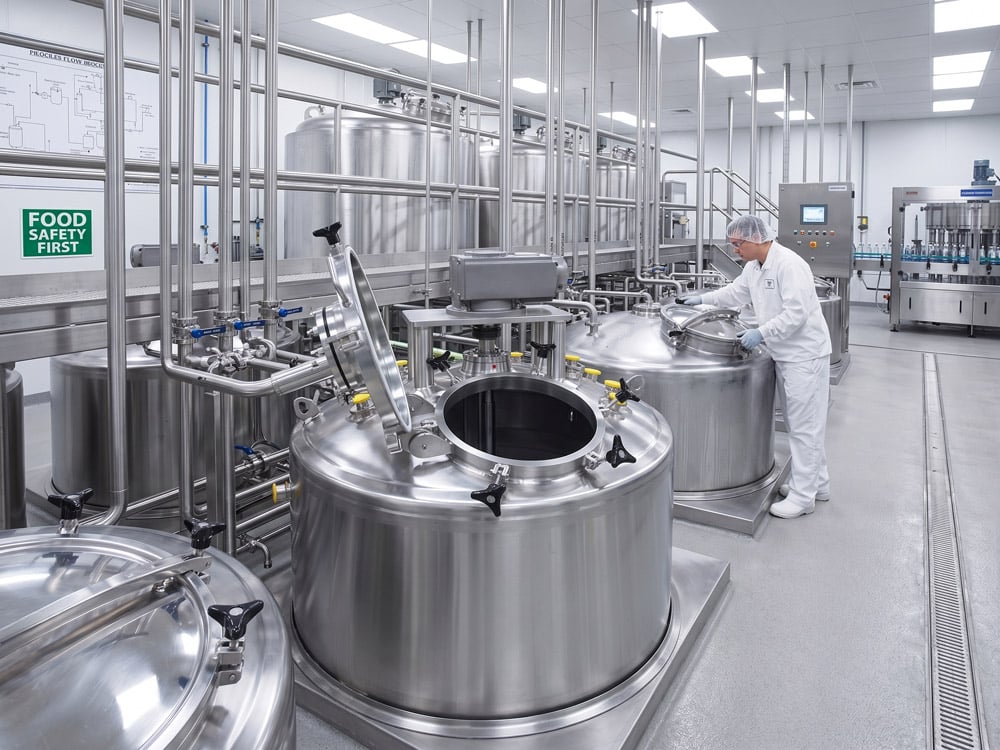
In any food manufacturing or dairy processing facility, tanks, silos, and process vessels are key components of the production line. However, there is another key component that can be overlooked that keeps these critical operations running smoothly, safely, and contamination-free: the manway gasket.
Manway gaskets play a crucial role in protecting product purity and preventing leaks of valuable ingredients or chemical solutions. If a gasket fails to fit or seal properly, it can lead to product spoilage, downtime, or safety hazards. Because every vessel's manway has a unique design, size, and pattern, selecting the exact replacement gasket is crucial.
Prevent product spoilage with the perfect, reliable sanitary seal.


Protecting product purity and preventing leaks of valuable ingredients or chemical solutions starts with selecting the right gasket material and dimensions. Nelson-Jameson offers three methods to identify your gasket:
The fastest and most reliable path to find the correct replacement gasket is to check the tank's original manufacturing nameplate. Most manufactured tanks feature a stainless steel tag welded or riveted to the exterior. If you can provide the following three elements straight away, Nelson-Jameson can trace the manufacturer's records without requiring manual measurements:
Pro Tip: If you can provide the manufacturer, serial number, and model straight away, Nelson-Jameson can trace the exact part number for your gasket without needing any additional measurements! Even if you only have a model number from an old gasket, this can often be traced back to the manufacturer and the tank.
If the nameplate is unreadable or missing, try contacting the mechanical contractor or engineering firm that originally installed the tank or completed your plant commissioning. Most will usually keep detailed spare parts lists, system schematics, and purchase invoices in their records, which can quickly reveal information about the installed manway.
When no manufacturer records are available, you will need to identify the material and measure the physical dimensions. Selecting the correct rubber compound is critical for withstanding operational temperatures, sanitizing chemicals, and product contact.
Different processing applications require different gasket materials to handle temperature, chemical cleaning cycles, and product contact.
Material & Key Performance Properties
Select the material that matches your product and cleaning cycles. If you are unsure what your old gasket was made of, Nelson-Jameson can help you select the ideal material for your specific application.
Supplement your maintenance team with in-plant services performed by our seasoned, expert technicians.
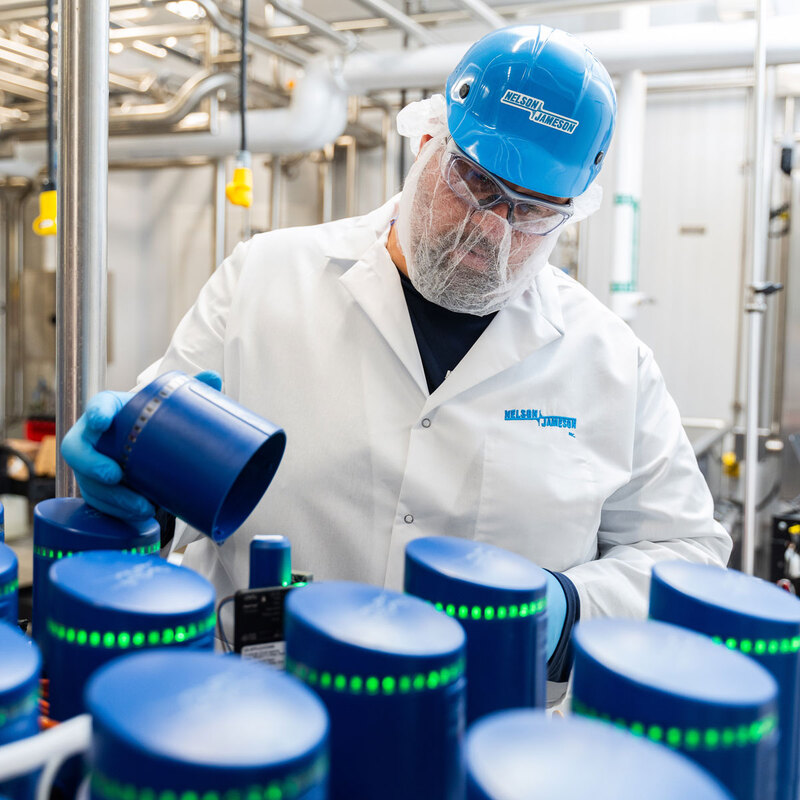
Before measuring, gather the appropriate tools. To ensure an airtight, sanitary seal, measurements must be precise. Do not rely on loose estimates or standard construction tape measures for small details.
Follow these structured procedures to measure either your existing, non-distorted gasket or the actual metal seating groove on the manway door:
Visual profiles are extremely helpful for our technical team in verifying your gasket's exact cross-section. Take four high-resolution photos: (1) Front Profile, (2) Back Profile, (3) Side Profile (to show the long-leg or cross-section thickness), and (4) The Tank Opening itself showing the metal seating groove.
Our Sanitation and Process Component Specialists are ready to assist. Contact us with your information and get an accurate quote today!


September 28, 2026
Uncontained hair remains one of the most frequent physical contaminants in food processing environments,...
September 23, 2026
Keeping your facility's Clean-in-Place (CIP) operations running smoothly is critical — especially when o...
September 23, 2026
For years, the food manufacturing and dairy processing industries have relied on "reactive control". In ...