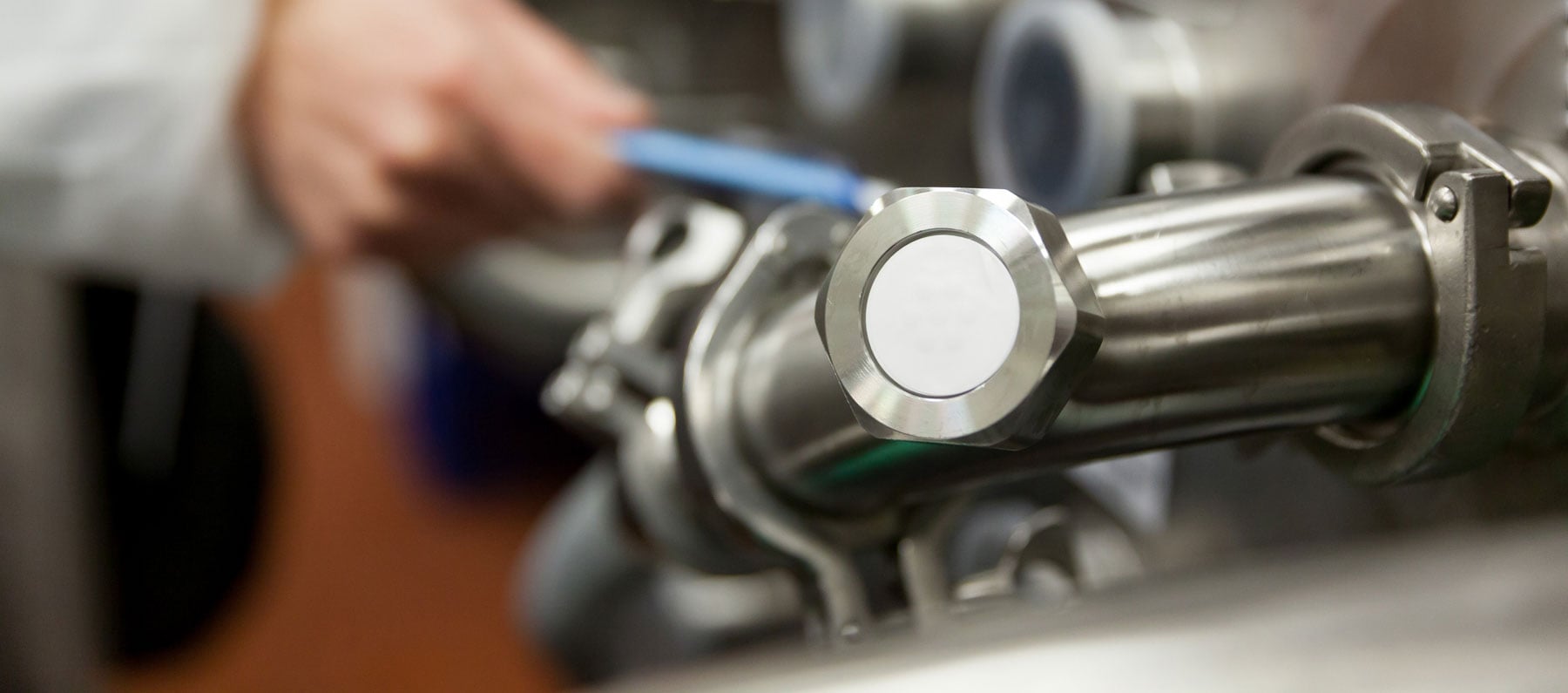

Line contamination and product recalls carry massive financial and reputational risks. Aseptic sampling provides food and beverage manufacturers and dairy processors with real-time quality assurance, safeguarding batch integrity without interrupting continuous production.
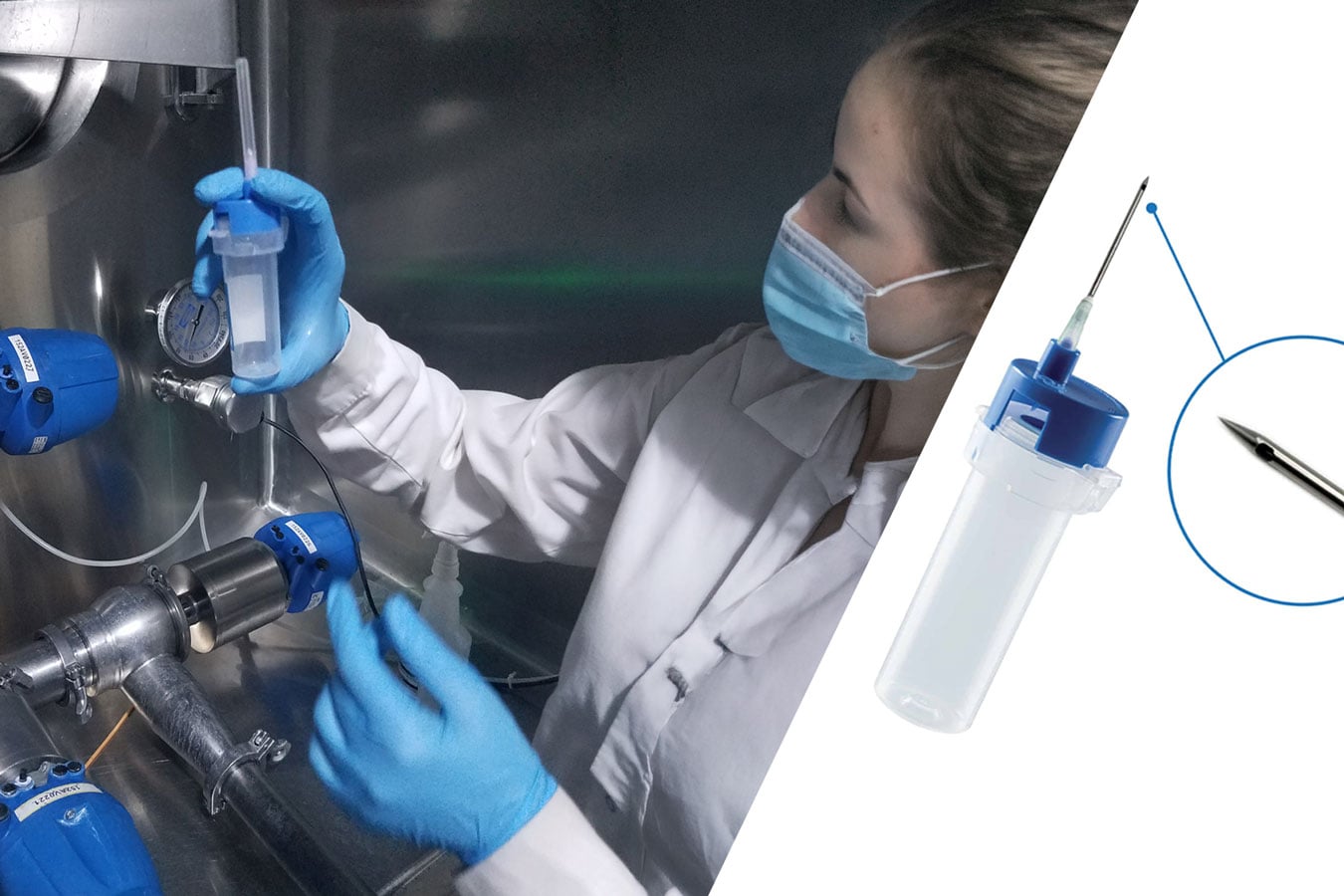
Aseptic sampling is the practice of drawing product from a processing line or container using sterile tools, ensuring you don't introduce outside microorganisms into the sample or the main batch.
Clean equipment protects sample purity, but data quality depends on how you sample from the line.
Learn more about training focused on aseptic sampling, designed to teach individuals how to effectively collect samples.
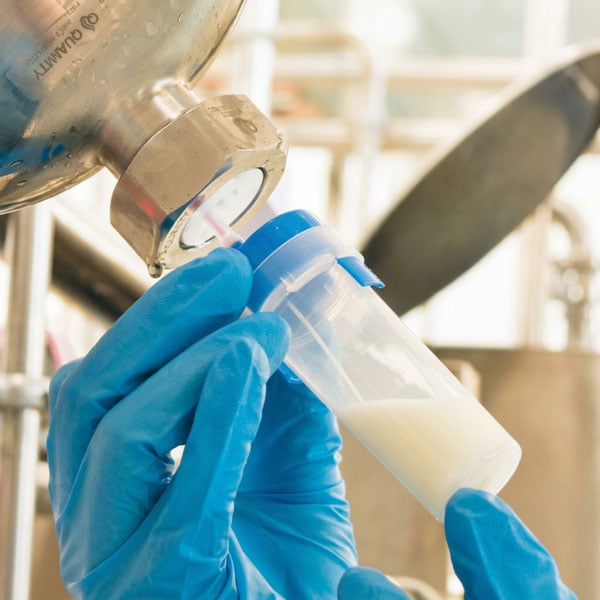
While both methods capture actionable data, they serve fundamentally different operational purposes:
Grab Sampling: A single sample taken from a single location at a specific point in time. It provides a fast, simple snapshot of current line conditions but doesn't account for tank stratification, settling, or process fluctuations over time.
Representative: Sterile gear and clean execution protect sample purity, but representative sampling ensures the physical and chemical profile of a small sample actually mirrors the entire batch. By accounting for tank stratification, settling, and fluid dynamics, this strategy dictates where and when to pull material so your fat, solids, pH, and microbial counts reflect the whole volume, not just an unmixed pocket.
Understanding these distinctions isn't just about terminology; it's about protecting your batch data. When any one of these three elements fails, your test results stop being accurate.
Sampling methods directly dictate whether your lab results reflect reality or just noise. While lab equipment can measure down to parts per billion, it can only analyze what’s in the vial, so your test results are ultimately capped by the sample's integrity. A failure in equipment cleanliness, operator transfer, or sample location cascades through the entire testing pipeline, turning high-precision lab data into misleading information.
To protect sample integrity, collection points must be positioned strategically across the processing line.
Sampling at critical process stages lets you isolate contamination early, before an out-of-spec issue reaches final packaging.
Rather than relying on random sampling, a risk-based layout targets high-risk control points across the line, making it easier to catch quality drift at the source. In a food or dairy plant, this sampling strategy generally splits into two key focus areas:
Drawing an uncontaminated sample from a live process line requires five key components:
Keeping your fluid path closed is the only way to guarantee reliable lab results. When setting up your sampling line, stick to sterile, single-use needles and vessels made from FDA-compliant materials like polypropylene or sanitary stainless steel. To get the most accurate results on the plant floor, make sure you:
Each food and beverage manufacturing or dairy processing facility is unique. It's important that every facility follows the best step-by-step procedure based on its specific needs to ensure that it is done safely and effectively.
To protect sample integrity, avoid these frequent operational errors:
Hardware shortcuts: On the hardware side, drawing from stagnant zones or using standard sanitary valves instead of true aseptic fittings ruins sample accuracy from the start.
Floor habits: The biggest culprits are rushed sanitizer dwell times, handling sterile barriers with bare or dirty gloves, and exposing open containers to ambient air.
By eliminating cross-contamination during monitoring, aseptic sampling safeguards product integrity and batch consistency across five core applications:
Setting up a compliant aseptic sampling program requires more than just installing the right hardware; it takes validated procedures and a trained team. Whether you are auditing an existing line or building a sampling protocol from scratch, Nelson-Jameson helps food and beverage facilities select compliant equipment, establish standard operating procedures, and eliminate sampling errors.
Ready to elevate your facility's sampling standards? Explore our Aseptic Sampling Collection Training. And fulfill “everyday lab” needs for food manufacturing or dairy processing facilities from Nelson-Jameson here!

October 21, 2026
Drawing samples from thick or heavy liquids often causes needle clogs, slow sample draws, and incomplete...
October 20, 2026
In food and beverage manufacturing, robust environmental monitoring programs (EMPs) serve as the primary...
October 16, 2026
The connection between worker safety and food safety is direct and unavoidable: when footwear fails to f...
Food Safety, Laboratory

Food Safety, Sanitation, Cleaning Tools, Color Coding
Food Safety, Sanitation, Cleaning Tools, Color Coding