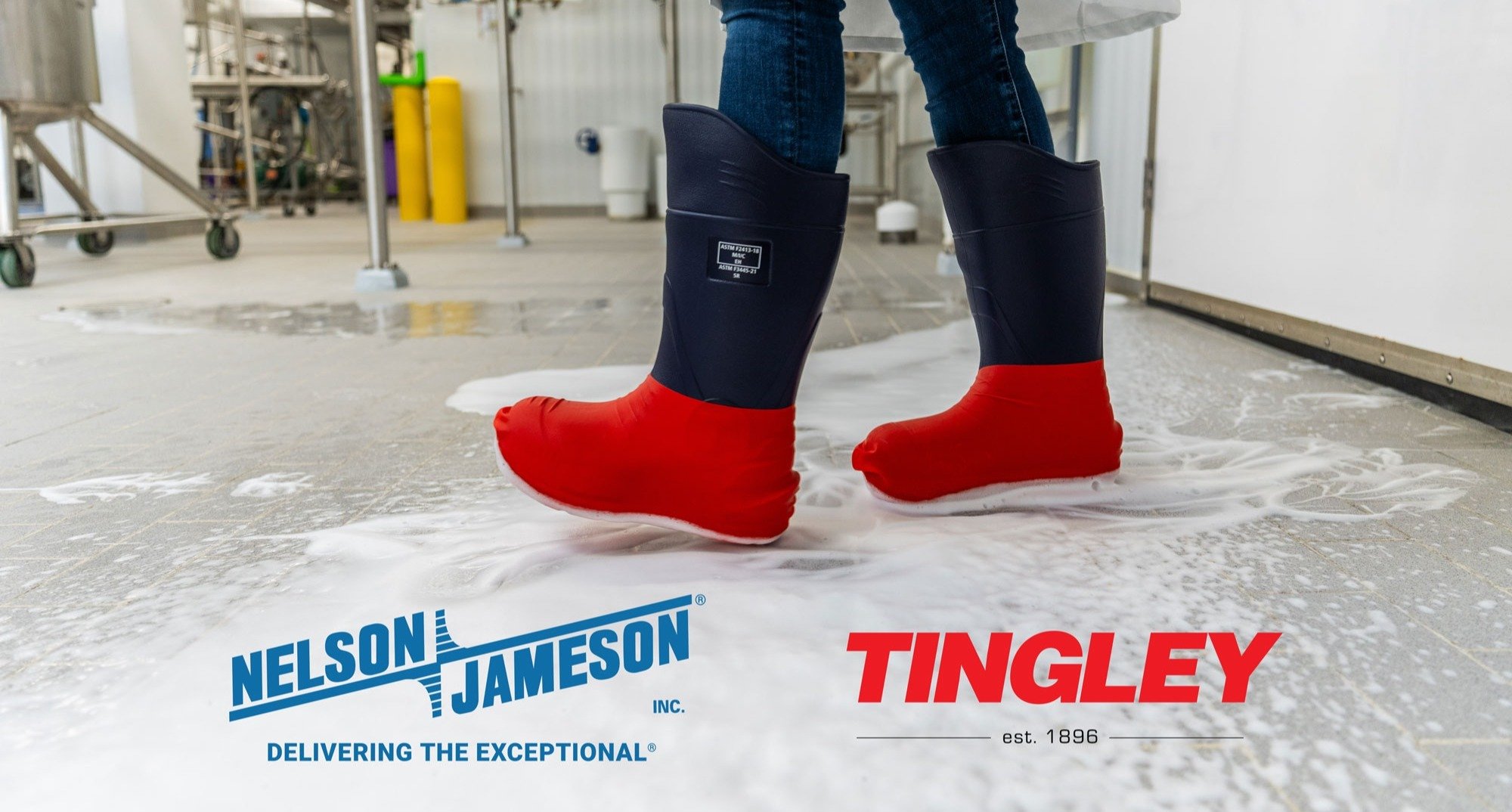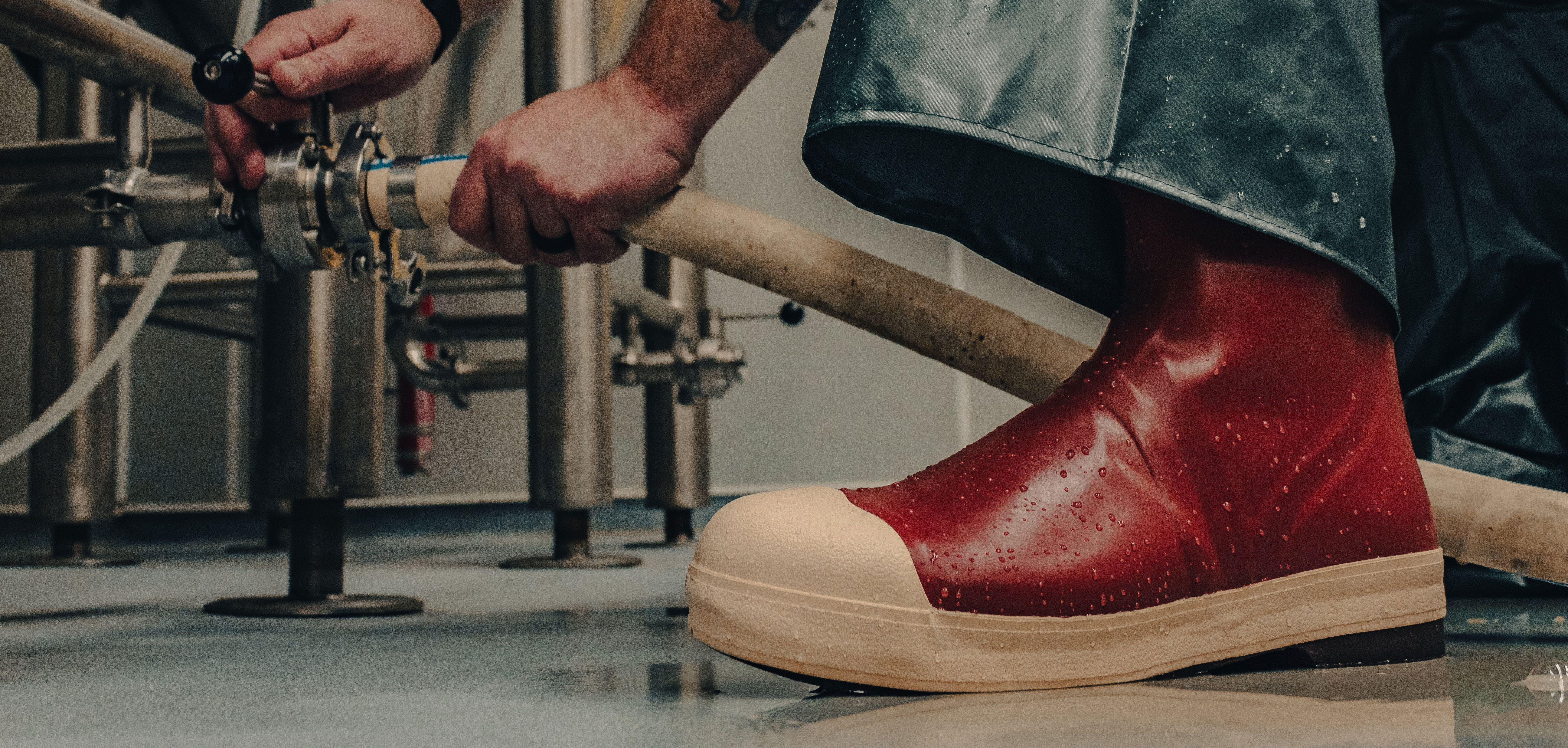

Ensuring comprehensive worker safety and food safety in food manufacturing facilities is crucial, and that safety begins from the ground up—with protective footwear. Choosing the right safety toe cap is a must, as it significantly influences comfort, efficiency, and compliance in your unique environment.
As technologies advance in materials and processing methods, the performance of safety footwear continues to improve. Historically, steel-toe caps have been used in footwear since at least the 1930s to protect against impact and compression injuries. Modern options offer a range of choices in steel, alloy, and composite materials.
Tingley PPE is built for durability. Find the right footwear and outerwear for your food manufacturing facility today.

With many boot options available for toe cap construction, it’s understandable that users might question whether their protective footwear meets safety requirements. Fortunately, the U.S. Occupational Health and Safety Administration (OSHA) and the American Society for Testing and Materials (ASTM) have clear requirements for testing and labeling safety footwear.
OSHA mandates the use of Personal Protective Equipment (PPE) to reduce employee exposure to workplace hazards. Specifically, U.S. law states that protective footwear must comply with the ASTM F2413, Standard Specification for Performance Requirements for Protective Footwear.

Regardless of the material—steel, alloy, or composite—all safety toe footwear sold in the U.S. must meet standardized impact and compression performance requirements to bear the ASTM F2413 designation. The ASTM F2413 standard sets the pass/fail performance criteria for safety footwear.
The two main safety criteria evaluated are Toe Impact Resistance ("I") and Toe Compression Resistance ("C"). While ASTM F2413 outlines the performance specifications, the related standard, ASTM F2412, outlines the specific test methods.
All toe cap protection relies on the “defended space” concept, creating a protective barrier area around the toes.
To determine a pass/fail performance, the resulting height of the clay cylinder is measured after testing. The ASTM F2413 performance requirement states that the post-test height of the clay cylinder must be at least 0.5 inches tall. This remaining height represents the safe space occupied by your toes. Footwear must pass both the impact and compression tests to bear the ASTM F2413 compliance label.
Choosing the best toe cap type depends on evaluating the pros and cons of each material against your specific work environment. Factors like temperature, time spent standing versus walking, and the type of heavy equipment used should guide your decision.
1. A closer look at steel-toe caps: Steel toes remain highly popular and are generally less costly to manufacture, often resulting in less expensive safety footwear compared to other designs. However, steel-toe caps readily transfer cold from the outside environment to the toes. They will also set off metal detectors. In extremely rare cases of severe compression, a steel toe cap could become severely compressed, potentially entrapping or severing the wearer's toes.
2. A closer look at alloy toe caps: Alloy toe caps are typically made from an aluminum alloy. They satisfy consumer desires for lighter-weight boots and offer lighter-weight safety footwear compared to steel. On the other hand, aluminum alloys tend to be more expensive than steel. They share the major drawback of steel in that cold transmission is poor, meaning alloy toes may not be ideal for outdoor winter work or refrigerated environments. Like steel, alloy toes will also set off metal detectors.
3. A closer look at composite toe caps: Composite toe caps are rapidly being integrated into safety footwear as more safety professionals realize their benefits. Composite materials currently in use include, but are not limited to, Kevlar®, polycarbonate, fiberglass, and carbon fiber. Composite materials are much less thermally conductive than steel and aluminum alloy. This could be a major benefit for food processing environments, as composite toe caps help keep feet warmer when working in extreme cold or in refrigerated food processing plants, because exterior cold temperatures do not pass into the feet as readily. Composites will not corrode, will not set off metal detectors, and will not conduct electrical current. Some composites also provide anti-fatigue benefits due to their lighter weight than steel. If subjected to extreme forces, a composite toe cap will typically either rebound or fracture into multiple pieces, significantly reducing the likelihood of toe entrapment.
While every ASTM F2413 compliant safety toe cap—whether steel, alloy, or composite—provides the standardized protection against impact and compression, the specific composition matters when factoring in other workplace hazards like cold, electricity, or metal detection requirements.
Tingley is a trusted partner with Nelson-Jameson and offers a wide range of materials and toe cap types in our protective footwear. Check out our full selection of PPE here!
Related: Begin your Safety & PPE assessment with Nelson-Jameson >


September 28, 2026
Uncontained hair remains one of the most frequent physical contaminants in food processing environments,...

September 23, 2026
Keeping your facility's Clean-in-Place (CIP) operations running smoothly is critical — especially when o...

September 23, 2026
For years, the food manufacturing and dairy processing industries have relied on "reactive control". In ...