When facilities attempt to tackle Listeria contamination, they often rely on Environmental Monitoring Programs (EMPs) that are fragmented and lack a clearly defined purpose. A major pitfall in many of these food safety programs is a fundamental misunderstanding of two critical concepts: validation and verification. Running an EMP without clearly separating these two functions can give a facility a false sense of security, allowing pathogens to persist right under their noses.
Based on the insights of Cornell University's Dr. Martin Wiedmann in our recent video session, let's explore the science of the "Seek and Destroy" methodology and how modern facilities are overhauling their approach to environmental sampling.
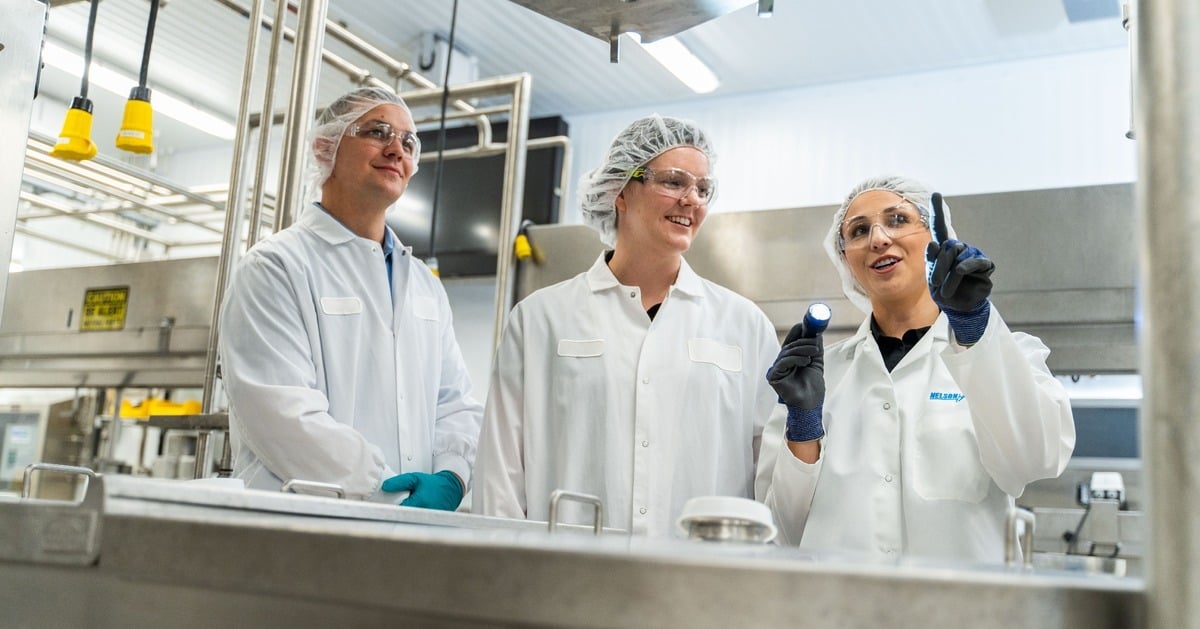
Nelson-Jameson, Neogen, and Dr. Martin Wiedmann of Cornell University dive into what it takes to upgrade your facility's Listeria control program.
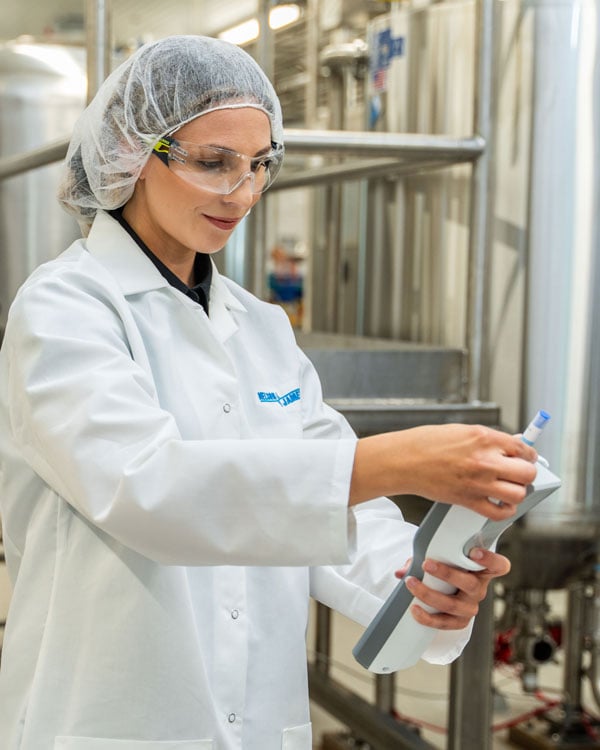
To truly control Listeria, facilities must clearly define and separate validation from verification. While the terms sound similar, they serve entirely different conceptual purposes:
The systemic danger arises when a facility relies heavily on verification testing without proper upfront validation. If you are consistently verifying a sanitation procedure that has never been scientifically validated to remove Listeria, you are essentially just verifying a bad procedure. In these scenarios, a facility might pour a high concentration of sanitizer on a positive site, get a negative re-swab, and convince themselves the problem is fixed. In reality, they haven't destroyed the Listeria; they are just hiding it for a few weeks until it comes back.
To break this cycle, industry leaders utilize the "Seek and Destroy" methodology. While "Seek" is clear—actively hunting for the pathogen—the "Destroy" portion is frequently misunderstood.
Many teams mistakenly believe the goal is to destroy the Listeria bacteria itself. Because Listeria is a highly common organism found in natural environments, it is continually reintroduced into facilities. The true purpose of the "Destroy" phase is to destroy the niche, or the harborage site, where the Listeria lives. Only by permanently eliminating these protective growth niches (like micro-cracks or hollow rollers) can a facility have a lasting impact on pathogen control.
You cannot detect what you do not collect. If a facility wants to actively seek out harborage sites, they must rethink their sampling techniques.
Many facilities suffer from a "12x12 template" mentality, where samplers swab a flat, easy-to-reach 10x10 or 12x12-inch square on a piece of equipment. Dr. Wiedmann notes that to find actual growth niches, teams must ignore the 12x12 idea and actively sample irregular areas, cracks, and corners.
A state-of-the-art "Seek and Destroy" mission cannot succeed if a facility penalizes its sanitation team for finding positive swabs. If finding a positive result leads to punishment, employees will naturally default to swabbing flat, easy-to-clean surfaces just to hit their quotas and get a negative result.
To build a mature food safety culture, corporate leadership must redefine success. Facilities need to set up a system that encourages the collection of samples that yield positive results. By removing quotas that disincentivize finding positives, frontline workers can take true ownership of the process and actively hunt for risks before they reach the product line.
Join me, Dr. Martin Wiedmann from Cornell University, and Ana Lazano of Neogen in our latest on-demand video session: Sampling to Validate and Verify Listeria Control Program in 2026.
September 23, 2026
Keeping your facility's Clean-in-Place (CIP) operations running smoothly is critical — especially when o...
September 23, 2026
For years, the food manufacturing and dairy processing industries have relied on "reactive control". In ...
September 17, 2026
When workers remove safety glasses mid-shift due to fogged lenses or poor fit, they create immediate exp...

Food Safety, Laboratory

Food Safety, Sanitation, Cleaning Tools, Color Coding
Food Safety, Sanitation, Cleaning Tools, Color Coding