A Guide to Eye Protection for Food Manufacturers

September 17, 2026

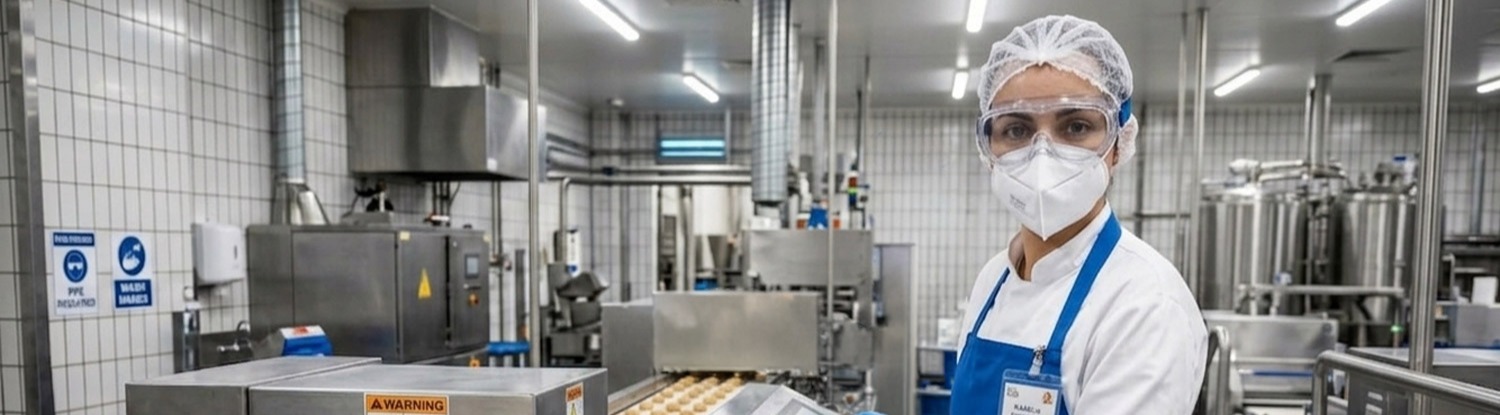
When workers remove safety glasses mid-shift due to fogged lenses or poor fit, they create immediate exposure to chemical burns, impact injuries, and audit violations. Standard safety glasses struggle to withstand the high steam and harsh conditions of food and dairy processing. Protecting your team requires eyewear engineered specifically for the hazards on your facility’s floor.

As a single-source supplier to the food and dairy industry, Nelson-Jameson goes beyond supplying basic eyewear and PPE. We deliver fit-for-purpose eye protection, ensuring every pair of glasses is fully compliant and engineered for harsh processing conditions long before it reaches your team.

To keep your workforce protected and your lines compliant, our eye safety offerings focus on three critical floor challenges: lens performance under environmental stress, foreign material risk on the line, and role-specific hazard coverage.

Reliable Eye Protection You Can Trust

Equip your team with top-tier protective eyewear designed to meet rigorous job site safety standards.
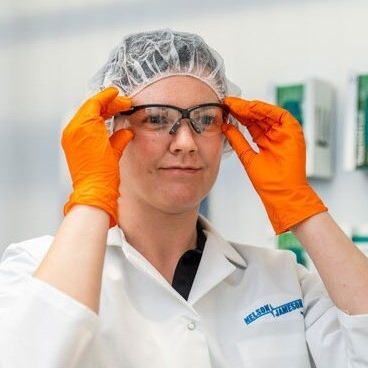
Lauren-Zellner-finishes-putting-on-safety-glasses_WEB600x400-1

Challenge: Lens Durability Under Stress

In any processing or manufacturing plant, workers navigate constant environmental hazards from chemical splashes to high-temperature steam. But even when teams are equipped with standard safety gear, two pervasive issues frequently compromise workplace safety: lens fogging and scratching.

When workers can’t see clearly, their first instinct is to pull off their eye protection. That decision can lead to a few operational challenges:

  • Safety Compliance Breaches: Unprotected workers violate plant safety standards.
  • Increased Injury Risks: Chemical burns and impact injuries spike when gear is off.
  • Lost-time Incidents: Preventable injuries disrupt shift productivity and drive up operational costs.

Nelson-Jameson’s Solutions:

  • Permanently Bonded Anti-Fog Lenses: Advanced coatings clear moisture immediately, allowing workers to keep eye protection on.
  • Dual-Coated Scratch Resistance: Durable lens treatments withstand daily plant wear and tear, maintaining clear vision over extended use.

For a deeper dive into lens performance, read our guide on Advanced Safety Glass Technology for Food Manufacturing Facilities

Challenge: Cross-Contamination & Foreign Material Risk

Standard eye protection wasn’t designed for food lines; loose glasses or non-compliant materials pose severe foreign material and sanitation risks.

  • A dropped frame screw

  • Loose strap

  • Misplaced pair of glasses

Any of these items can trigger a product recall or audit failure. Nelson-Jameson helps mitigate these foreign material risks through:

  • ANSI Compliance & Line Security: Choose from a wide selection of eye protection, including high-impact ANSI Z87.1-rated styles. For high-risk areas, metal-detectable frames and lanyards ensure that if gear ever falls, inline detection equipment catches it immediately. Learn more in our article on how metal-detectable eyewear helps secure the supply chain.
  • Zone Sanitation: Color-coded safety gear options designed to align with plant HACCP plans and prevent cross-contamination across raw vs. RTE zones.

Trusted Safety Gear for Your Team

Stock up on essential PPE that keeps your facility compliant, efficient, and fully protected on every shift.
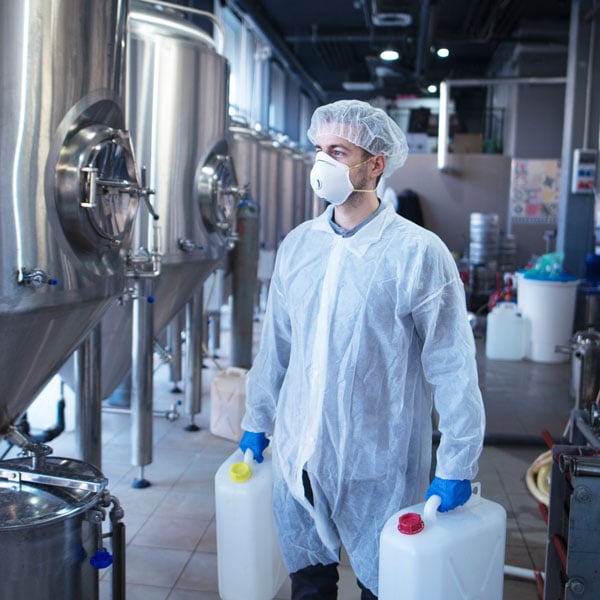
Safety-PPE-HERO

Challenge: Multi-Hazard Needs & Supplier Consolidation

Maintenance technicians facing high impact, sanitation crews handling caustic chemicals, and line workers navigating reflective stainless steel all require completely different eye protection. Standardizing on a single style leaves gaps in safety, while custom-ordering for every department quickly creates purchasing headaches.

The Solution:

Nelson-Jameson matches eyewear features directly to the hazards of each department. Washdown crews require chemical-splash-rated eyewear to block high-pressure spray, while line operators need lightweight, anti-glare, anti-fog lenses for long-shift clarity. Cold-storage workers rely on dual-pane thermal lenses to prevent fogging during sharp temperature shifts, and maintenance technicians need high-impact, scratch-resistant coatings for heavy mechanical wear. Outfitting workers based on these specific floor risks ensures continuous wear, regulatory compliance, and plant-wide safety.

Making Eyewear Work for Your Facility

Upgrading your plant’s protective eyewear does more than satisfy compliance; it directly protects product integrity, reduces injury-related downtime, and keeps workers wearing their gear without unnecessary discomfort.

See the difference on your processing floor firsthand. Reach out to our support team to request a sample today. If you're looking to further streamline your operations, we can also help you consolidate your plant's entire safety supply chain!
Recent posts

Food Safety

September 15, 2026

How Nelson-Jameson Supports Food Safety

Food safety doesn't start on the factory floor. It starts deep in the supply chain. We know because our ...
Food Safety

September 3, 2026

A Food Manufacturer's Guide to Managing Hand Safety Risks

Hand safety isn't just about injury prevention; it's your first line of defense against cross-contaminat...
Processing & Flow Control

August 27, 2026

Safeguarding Precision: Temperature Instrument Calibration & Repair

Out-of-calibration thermometers compromise product safety, jeopardize regulatory compliance, and lead to...

Related resources

Assessment
AnsellGUARDIAN Safety & PPE Hazard Analysis

AnsellGUARDIAN Safety & PPE Hazard Analysis

Each complimentary AnsellGUARDIAN® assessment is tailor-made to meet your specific safety & PPE objectives, whether that be for a single application or an entire facility. You will receive best practice recommendations to optimize your PPE dispensing and advise on business performance improvements.

What you’ll get:

  • Personalized risk management solutions to improve worker safety, increase regulatory compliance, and reduce injuries.

  • Guidance to reduce the cost of ownership.

  • Best practices to optimize employee performance and productivity.

How it's done:

  • Field experts observe each application, utilizing the provided data and a proven process to deliver a customized, tailor-made assessment.

  • The assessment employs a three-step approach: analysis, implementation, and improvement.

  • A simple process focuses on the most relevant areas to deliver the appropriate safety solution.

Worker Safety

Webinar
Worker Safety is Food Safety: Meeting New Standards to Protect Your Consumers and Brand

Worker Safety is Food Safety: Meeting New Standards to Protect Your Consumers and Brand

With existing and emerging threats, food safety has never been more important to food manufacturers in protecting their consumers and their organization. Worker safety is closely tied to food safety, and utilizing robust worker safety measures and high-quality Personal Protective Equipment (PPE) is essential. In food manufacturing, accidents aren’t just safety incidents; they can set off a domino effect, creating risks to consumers and brands.

Worker Safety

Program Catalog
3M™ Safety Products Catalog

3M™ Safety Products Catalog

Employees are your greatest asset, protect them with 3M Safety Products.

Worker Safety

Webinar
Analyzing Hazards and Innovative PPE for Food Manufacturing

Analyzing Hazards and Innovative PPE for Food Manufacturing

Failure to effectively identify and anticipate workplace hazards is a leading cause of worker injury, with recorded cases numbering in the millions each year. A leading cause is inadequate PPE for workers’ hands, which introduces hidden costs that impact both employee well-being and the bottom line.

Investing in quality PPE instantly improves organizational efficiency, reduces waste, and minimizes needed recovery time. Incorporating a process to increase hazard recognition is a critical step to establishing effective health and safety procedures.

Discover the true cost of inadequate protection and how to identify safety hazards in order to minimize workplace risks and increase productivity.

Worker Safety