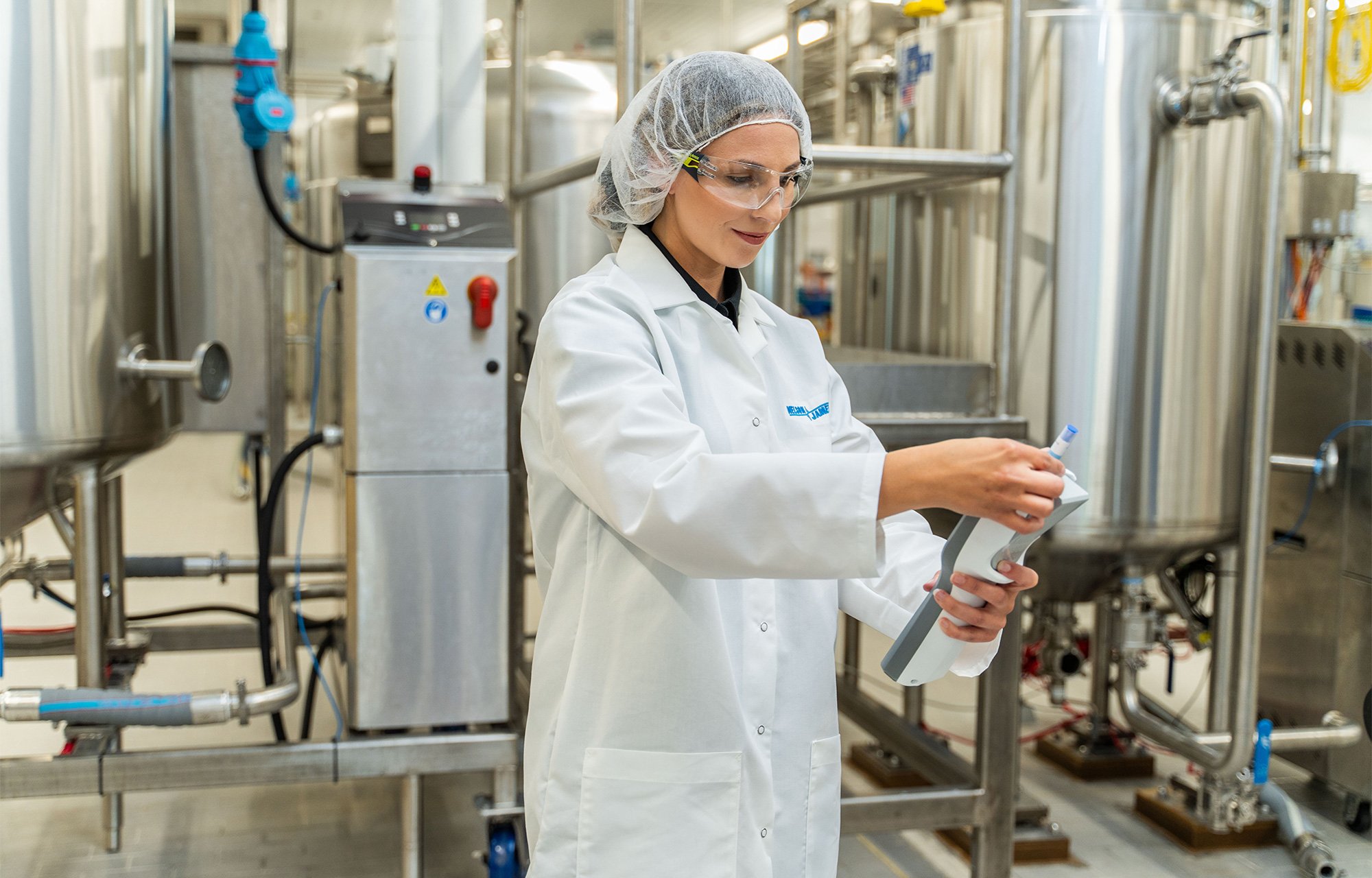

Ensuring the safety and quality of dairy products requires a robust framework combining rigorous testing protocols, regulatory compliance, and continuous education. In this discussion, Nelson-Jameson food safety & quality specialist Lyndsey Cypriano dives into the complexities of modern Environmental Monitoring programs and the specific strategies used to mitigate high-risk pathogens like Listeria and Salmonella.
The discussion also explores the critical influence of regulations—including the Pasteurized Milk Ordinance (PMO) and FSMA — on facility operations, alongside the essential procedures for traceability, root cause analysis, and hands-on staff training. Read on for a comprehensive look at the systems protecting our dairy supply and empowering food safety.
On testing protocols are currently used in dairy processing facilities to detect pathogens, and how methods have evolved over time:
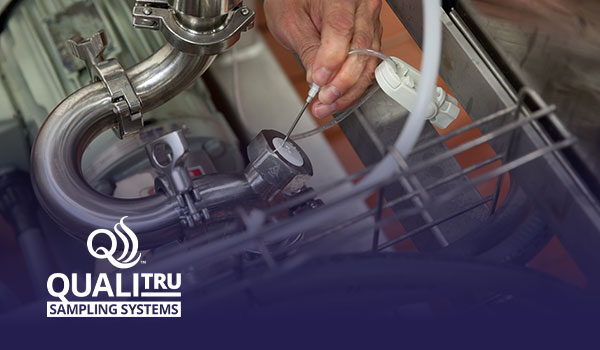
Lyndsey Cypriano: An Environmental Monitoring program is used. Swabbing surfaces with a sponge-stick or pre-moistened swab with enrichment media in different high-risk zones (Zones 1-4) in the plant to test mainly for Listeria or Salmonella pathogens. These swabs will be tested at a 3rd party plant that is ISO certified to test for the pathogens. Testing methods have evolved so much over the years. The results are faster, easier to use, and widely adopted.
Our team can help your team improve food safety in your food manufacturing facility.

On the most common pathogens that are encountered in dairy products and what challenges they present for processors in terms of safety and quality:
LC: Listeria monocytogenes and Salmonella spp are the most common pathogens we encounter. The challenges with these pathogens are hard to remove completely from the facility. The main goal is to mitigate the pathogens from getting into the finished product. And prevent new pathogens from entering the facility. Pathogens are present in our incoming raw milk. Preventive controls are put in place under our Food Safety Plan.
On how advancements in laboratory technology and testing methods have improved the speed and accuracy of pathogen detection in dairy:
LC: The advancements in laboratory technology and testing methods has significantly improved in both the speed and accuracy of pathogen detection on our finished products and environmental samples. The traditional culture-based methods, while reliable, often required 2–5 days to obtain results. Now we are seeing results with in hours 8-24 hour turnaround time. These technologies have improved the sensitivity, which allows detection of very low levels of pathogens. Specificity reduces false positives and negatives. Turnaround time enables quicker decision-making, product release, and recalls when necessary. In addition, environmental monitoring tools, real-time data tracking, and integration with LIMS (Laboratory Information Management Systems) have enhanced traceability, compliance, and corrective action response times.
Addressing key regulations governing pathogen testing in dairy processing, and how they influence testing practices and facility operations:
LC: Key regulations governing pathogen testing in our facility come primarily from the FDA, USDA, and state regulatory agencies, and they play a critical role in shaping testing practices and facility operations. Here are some examples of what we follow:
Pasteurized Milk Ordinance (PMO): The PMO, published by the FDA, is the cornerstone regulation for Grade “A” dairy products. It outlines testing requirements for pathogens like Listeria monocytogenes, Salmonella, and E. coli, along with environmental monitoring protocols. We have to meet strict microbiological standards for raw and finished products and perform routine testing to maintain compliance.
FDA’s Food Safety Modernization Act (FSMA): FSMA mandates a preventive approach to food safety through Hazard Analysis and Risk-Based Preventive Controls (HARPC). We are required to conduct risk assessments, implement preventive controls, and verify the effectiveness of sanitation and pathogen control programs through regular testing.
USDA Regulations: We must comply with USDA microbiological testing protocols.
Third-party audits and customer expectations: We have adopted higher-than-mandated standards due to GFSI-benchmarked audits. We follow the BRC requirements. Along with customer requirements, which often call for expanded environmental monitoring programs (EMPs) and more frequent testing.
We maintain documented procedures, calibration logs, and corrective actions related to pathogen testing. Testing impacts production schedules (hold-and-release programs), hygiene zoning, and employee training programs. It also drives investment in rapid testing technology to meet turnaround time requirements and minimize product hold times.
Steps are taken for traceability, and how does the facility respond to potential contamination incidents in the event of a pathogen detection:
LC: In the event of a pathogen detection, our facility follows a Food Safety plan which is centered around traceability, containment, and corrective action. Here are some examples of what we do:
Immediate Isolation: The affected lot or production batch is placed on hold immediately. If the product has been released, a traceability system is used to track where it was shipped (internal logs, barcodes, lot numbers).
Root Cause Investigation: Our HACCP team initiates a root cause analysis. This involves reviewing environmental monitoring data, recent sanitation logs, equipment maintenance, and employee hygiene practices. All records are reviewed and all items are captured in a CAPA log.
Environmental & Product Retesting: Additional targeted swabbing and product retesting is done to confirm results and assess the scope of contamination. Vector swabbing and additional swabbing adjacent production lines, holding tanks, and contact surfaces may also be tested.
Regulatory & Customer Notification: If a positive is confirmed, we will notify the appropriate regulatory authorities (FDA or state departments). Depending on severity, customers are notified, and a recall may be initiated.
Corrective Actions: The HACCP team initiates deep cleaning and sanitization of affected areas. Reviews processes, employee practices, or review equipment which may be updated or modified. Preventive measures are strengthened to avoid recurrence (e.g., revising EMPs, retraining staff, updating HACCP/HARPC plans).
Documentation & Review: Every step is thoroughly documented, and a final report is often reviewed with regulatory agencies and internal quality leadership. HACCP team conducts a post-incident review to ensure long-term improvements.
On-Demand Webinar: Watch our recent discussion about food safety resources here!
How to ensure that staff are trained and informed about pathogen risks, testing procedures, and proper sanitation practices:
LC: To ensure our staff is well-trained and informed on pathogen risks, testing procedures, and sanitation practices, we follow a comprehensive and continuous training program:
Structured Onboarding & Annual Training: New employees receive onboarding training focused on food safety, personal hygiene, pathogen awareness, and basic microbiology. All staff undergo annual refresher courses to stay current on best practices and regulatory updates.
Job-Specific SOPs: Employees are trained using Standard Operating Procedures (SOPs) tailored to their role—whether in sanitation, sample collection, environmental monitoring, or laboratory testing. SOPs are reviewed regularly, and changes are communicated and reinforced through retraining or toolbox talks.
Hands-On & Competency-Based Learning: Practical, hands-on training is provided for sampling, plating, and swabbing techniques, as well as operating lab instruments. Employees must demonstrate competency through evaluations or shadowed activities before being signed off.
Continuous Communication & Updates: Supervisors and QA staff conduct routine meetings to discuss hygiene lapses, audit findings, or changes in protocol. Visual aids, signage, and reminders in key locations reinforce best practices.
Third-Party & Vendor Training: We collaborate with vendors like Neogen for specialized training on testing methods, such as Petrifilm, ATP, or allergen detection. Team members also participate in webinars, industry workshops, or third-party certifications (such as HACCP, PCQI, etc.).
Auditing & Accountability: Internal audits and GMP inspections help ensure procedures are being followed. Any deficiencies result in corrective action plans and retraining.
Find more food safety resources from Nelson-Jameson at our resource center, or contact our food safety experts today to get started in improving food safety in your food manufacturing facility.

September 15, 2026
Food safety doesn't start on the factory floor. It starts deep in the supply chain. We know because our ...
September 3, 2026
Hand safety isn't just about injury prevention; it's your first line of defense against cross-contaminat...

August 27, 2026
Out-of-calibration thermometers compromise product safety, jeopardize regulatory compliance, and lead to...
Food Safety, Laboratory

Food Safety, Sanitation, Cleaning Tools, Color Coding
Food Safety, Sanitation, Cleaning Tools, Color Coding