
Hand Protection: A Crucial Line of Defense for Food Safety

February 11, 2026
Jarrod Rice

There is a critical link between worker safety and food safety, and nowhere is this more apparent than with the human hand—the primary point of interaction between workers and the products they make.

Nelson-Jameson recently hosted a panel of safety and PPE experts from Ansell, along with its own specialists. Together, they discussed the "domino effect" of hand injuries, the latest innovations in glove technology, and the strategic importance of hazard analysis in food manufacturing facilities.

Watch on demand: Check out the full recording to learn more about innovative hand protection and hazard analysis.

Safety & PPE Hazard Analysis

Want to move from reactive to proactive safety measures and uncover hidden threats in your facility?
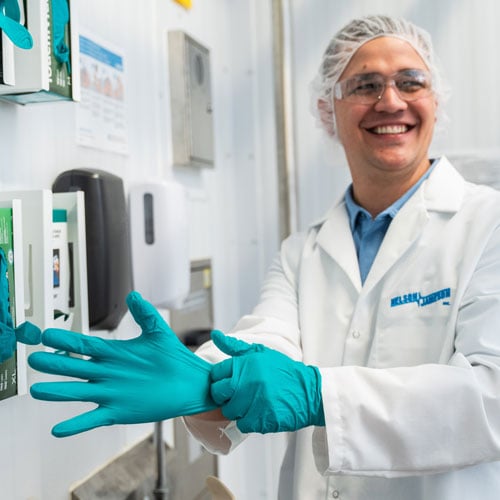
Adam-Monson-putting-on-a-pair-of-gloves-smiling-off-screen-2

The ‘Goldilocks Dilemma’ and The Domino Effect

A major challenge in hand protection is the "Goldilocks dilemma". If a glove is too thick, it causes hand muscle fatigue and reduces dexterity, leading workers to double-glove or lose focus; if a glove is too thin, it leads to injuries. Finding the "just right" fit is essential because distraction caused by pain or discomfort often leads to mistakes.

It was emphasized that worker safety is food safety, outlining the "domino effect". A cut on the line is not just an OSHA reportable incident; it becomes an immediate food safety liability regarding biological contaminants entering the food supply. Furthermore, glove failure poses a risk of foreign material control, where fragments of the glove itself could end up in the product.

Innovation and R&D: Quantifying Comfort

To address these challenges, manufacturers like Ansell are investing heavily in R&D to address market trends such as multi-hazard protection and touchscreen compatibility. It was noted that comfort is subjective, so R&D teams now use five specific tests to quantify it, measuring factors like palm thickness, stiffness, and moisture vapor transmission.

The panel highlighted several innovations designed to improve compliance and productivity:

  • Thinner, Stronger Liners: The industry is moving toward 21-gauge liners that offer high cut protection while maintaining a "second skin" feel, a significant leap from older, thicker gloves.
  • Aerofit Technology: New coatings are thinner than traditional nitrile foam, allowing workers to perform tasks quicker, according to testing.

Dual Protection: Solutions can offer both broad-range chemical protection and cut protection in a single glove, addressing the specific mixed hazards found in food plants.

What to Expect During a Hazard Analysis

To truly optimize a PPE program, the panel recommended utilizing a formal hazard analysis, such as the AnsellGUARDIAN program. It was explained that these assessments involve walking through the plant and talking directly to employees to understand their daily challenges.

During these assessments, experts often uncover hidden threats, including:

  • Non-Compliant Gear: Gloves on the plant floor that are not FDA-approved.
  • Improper Application: Using general leather gloves for tasks involving steam or chemicals rather than specialized thermal or waterproof gear.
  • Laundry Issues: Laundering companies improperly washing cut-resistant fibers on high heat, which degrades the material and shortens the glove's lifespan.

Standardization and Simplification

Beyond safety, these assessments help simplify procurement. Facilities often stock too many SKUs, leading to confusion about which glove to use for which task. A proper analysis can reduce a glove portfolio by up to 25%, making procurement easier and ensuring cross-functional standardization.


Nelson-Jameson: Your Partner in Safety

Hazard analysis services are a complementary tool to help maximize safety and compliance. Whether you need to address chemical risks, reduce hazards, or consolidate inventory, Nelson-Jameson and Ansell can help you start the journey toward a safer, more efficient facility.


Jarrod Rice

PR, Media Manager

Media Contact
pr@nelsonjameson.com
715-387-1151

Recent posts

Food Safety

February 3, 2026

A Deep Dive into Environmental Monitoring & Safety Protocols

Ensuring the safety and quality of dairy products requires a robust framework combining rigorous testing...

Food Safety

January 12, 2026

Combine Superior Cut and Chemical Protection with AlphaTec 58-835

Gloves can force a choice between comfort and protection. But compliance, efficiency in usage, and worke...

January 2, 2026

The Year in Food Manufacturing: Top Products and Stories of 2025

From regulatory updates to evolving needs for operational efficiency, food processors spent 2025 adaptin...

Related resources

Assessment
Training
Color-Coded Training & Site Assessment

Color-Coded Training & Site Assessment

Recognize and address possible hygiene and sanitation challenges based on the cleaning and material handling equipment available in your facility.

Through a discovery call, virtual, or on-site assessment, Vikan SQF Practitioner certified specialists will assist in confirming that your system and cleaning tool inventory aligns with your risk management objectives while pinpointing any missing tools and enhancing maintenance and usage practices. Evaluate whether your existing tools are utilized in the most effective manner, or determine if a more suitable tool exists for the task at hand. Ensure that your tools comply with all relevant standards and regulatory requirements. Site evaluations encompass a summary survey, an overview of the location, a color-coded factory layout plan, product suggestions, a recommended order form, and a proposal for a follow-up survey.


Food Safety, Sanitation, Cleaning Tools, Color Coding
Program Catalog
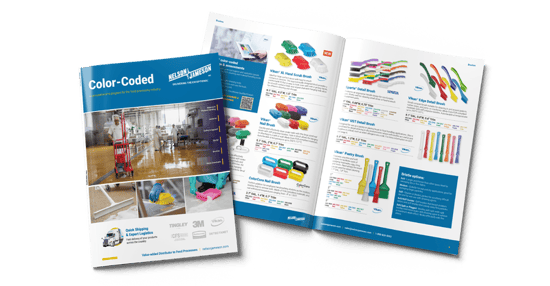
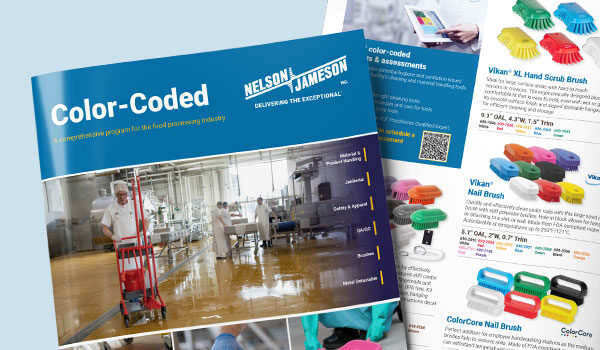
Color-coded Program Catalog

Color-coded Program Catalog

This is a comprehensive program for the food processing industry. Nelson-Jameson brings together the most extensive collection of color-coded products for material handling, product handling, janitorial, safety, apparel, QA/QC, and metal-detectable applications. With the right pieces, a color-coding system is a powerful tool in preventing cross-contamination of allergens and food-borne illnesses that can lead to sickness or expensive product recalls.

Color-Coded-Catalog_Open-Magazine-Mockup-1-1

Food Safety, Sanitation, Cleaning Tools, Color Coding

Webinar
Protecting the Food Supply: How to Harness Industry Resources for Food Safety Excellence

Protecting the Food Supply: How to Harness Industry Resources for Food Safety Excellence

Food safety is crucial in protecting consumers, and understanding how to ensure your program scales alongside your business is crucial in maintaining success. A program isn’t merely a matter of compliance; food safety is an ongoing initiative that must meet current demands and proactively stay ahead of emerging challenges.

Food Safety

Workshop
Neogen® Petrifilm® Certification Workshop

Neogen® Petrifilm® Certification Workshop

Get Petrifilm Certified through our complimentary immersive workshop for managers, personnel, and teams. The workshop offers practical knowledge through hands-on training and networking with industry professionals and experts. Attendees gain an in-depth understanding of Petrifilm technology and valuable insights into effective environmental monitoring practices.  Participants leave with a certification and a wealth of resources that can significantly contribute to elevating their plant's quality control standards.

Food Safety, Sanitation, Laboratory