
Protecting Your People and Your Product Through PPE

December 8, 2025
Jarrod Rice

There is a fundamental connection between worker safety and food safety: A failure in worker safety can potentially initiate a domino effect that jeopardizes product quality and food safety.

Jenna Ponshock, Director of Product Management at Nelson-Jameson, was joined by safety and PPE experts Brad Domagala and Rob Petersen of Tingley to share their insights on worker safety and food safety. They discussed holistic approaches to safety gear, navigating slip-resistance standards, and how proper PPE investment protects brand reputation.

Safety & PPE Assessments

Want to reduce workplace injuries and costs, enhance compliance, and simplify your PPE inventory? Begin your Safety & PPE assessment journey!

Lauren-Zellner-finishes-putting-on-safety-glasses_WEB600x400-2

The "comfortable and compliant" connection

At the heart of a successful safety program is the concept of keeping workers "comfortable and compliant". As Ponshock noted, if workers are uncomfortable, they become distracted—frequently readjusting eyewear or boots—which leads to errors and lower productivity.

More critically, an injury does not just affect the employee; it poses a direct threat to the food product. A slip and fall could result in a worker falling into machinery or product, leading to contamination, batch destruction, or even a recall. This connection underscores why PPE must be viewed as a strategic investment rather than a mere commodity.

Watch on demand: Check out the full recording to learn more about how PPE can protect both employees and products.

Why a holistic approach is essential

Implementing a PPE program is not a "one and done" action; it requires continuous evaluation and improvement. Domagala emphasized that a holistic approach involves:

  • Employee engagement: The most effective way to gauge the success of a program is to talk to employees who are directly on the line. If they feel their opinion is valued, they are more likely to buy into the safety program.
  • Preventing the "penguin walk": When footwear is heavy or slippery, employees walk cautiously (like a penguin). Scenarios like this lead to premature fatigue and lower morale.
  • Understanding the environment: Selection of gear must account for specific facility needs, such as the chemical makeup of foot baths, the type of flooring (e.g., Red Quarry tile vs. concrete), and the presence of debris.

Navigating standards: SR vs. SRO

A major portion of the discussion focused on the evolution of safety standards, specifically ASTM F2413 and the slip-resistance (SR) designations.

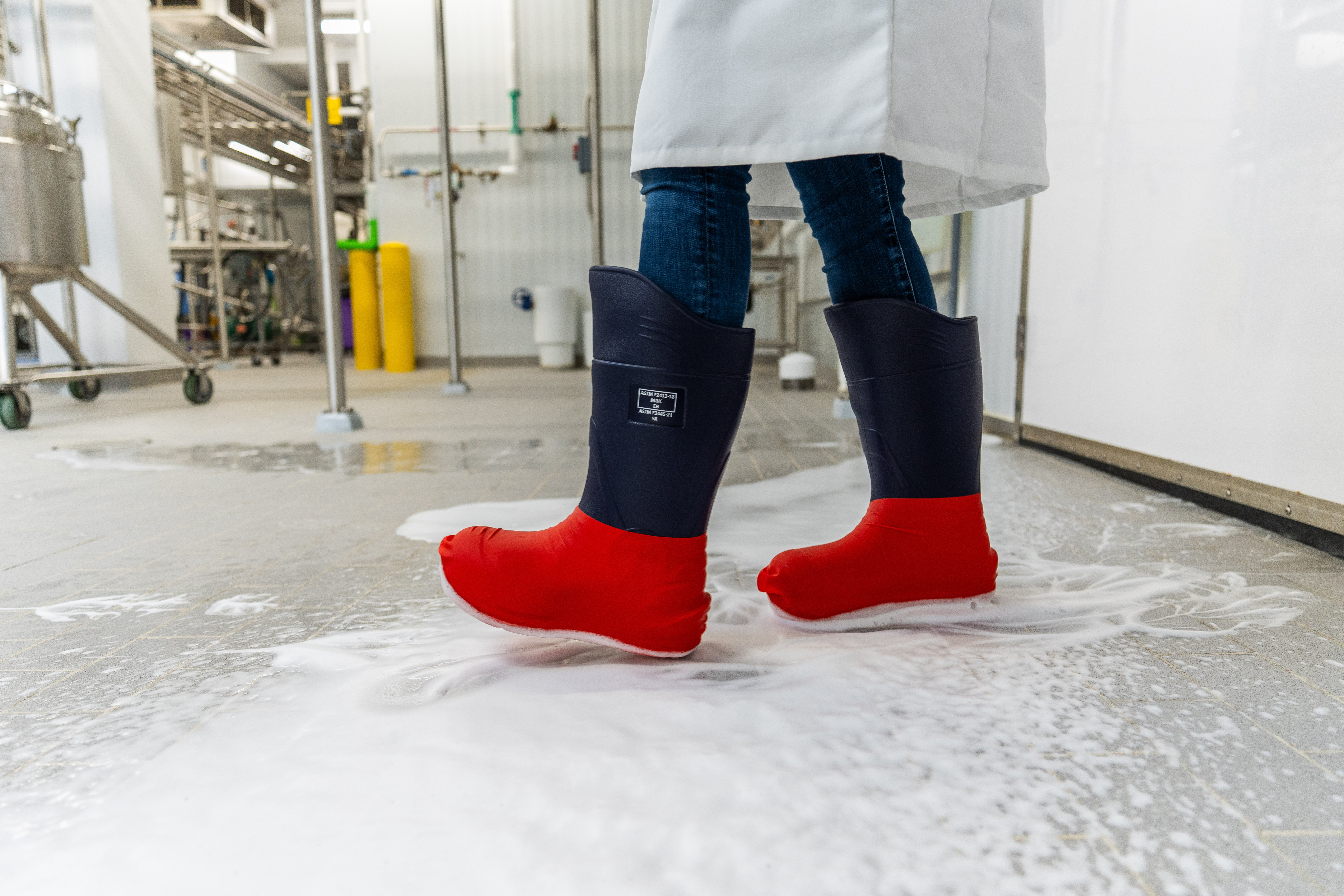
However, the industry has recently introduced the SRO (Slip Resistant – Oil) standard to address the specific needs of food plants with oily or fatty conditions. To achieve this rating, footwear must meet the standard SR requirements plus an additional test for oily-wet conditions. Petersen advised that regardless of the specific rating, safety managers should always request independent, third-party lab testing data to verify manufacturer claims.

Innovation and R&D in PPE

Innovation in PPE is driven by the "Voice of Customer" and finding solutions for real-world problems. The panel discussed several key innovations designed to reduce fatigue and improve compliance:

  • Pound for pound: Studies show that for every pound of weight removed from footwear, it equates to removing five pounds from the worker's back. Lighter boots, such as those using expanded materials, can significantly reduce fatigue and increase efficiency.
  • Fit solutions: Innovations like expansion gussets in boots accommodate workers with larger calves, ensuring they don't have to compromise on boot height or protection.
  • Hygiene solutions: New disposable natural rubber latex shoe covers offer a solution for keeping visitors or delivery personnel compliant without relying on hospital-style covers that fail in wet food plant environments.

"If we don't have workers who are wearing the safety and PPE products comfortable and compliant, it's going to domino effect into having a not structured food safety program." — Jenna Ponshock, Nelson-Jameson

What to expect during an assessment

To truly elevate a safety program, an in-facility assessment is critical. Domagala detailed that a typical assessment takes about 60 to 90 minutes and goes far beyond just looking at boots. Experts look for:

  • Flooring and chemicals: How footwear interacts with specific floor types and sanitation chemicals.
  • Cross-contamination risks: Ensuring maintenance teams aren't wearing outside "hunting boots" into the facility.
  • Overhead hazards: Checking for belts or machinery that might require snag-free, hoodless garments.

Measuring the ROI

Investing in high-quality, comfortable PPE yields a measurable Return on Investment (ROI) by mitigating substantial financial risks. The panel highlighted that the average fine for a violation can be nearly $16,000, while an average worker claim hovers around $50,000. Beyond direct costs, the investment protects against reputation-damaging recalls and cross-contamination events.


Nelson-Jameson: Your partner in safety

Ensuring worker safety is synonymous with ensuring food safety. Whether you need to navigate new slip-resistance standards or reduce employee turnover through better comfort, Nelson-Jameson can help.

Ready to evaluate your program? We offer comprehensive consultative Safety and PPE assessments to ensure your facility is both comfortable and compliant.

Jarrod Rice

PR, Media Manager

Media Contact
pr@nelsonjameson.com
715-387-1151

Recent posts

Food Safety

December 1, 2025

Tingley Iron Eagle® Line: Chemical Barrier Workwear for Food Manufacturing Excellence

Nelson-Jameson understands that efficiency and worker safety are equally important goals in food manufac...

Worker Safety

November 26, 2025

Using Boot Covers as a Critical Control Point Against Contamination

For food manufacturers, a lapse in either worker safety or food safety can initiate a domino effect. It ...

Worker Safety

November 26, 2025

Navigating SR and SRO Standards for Optimal Slip Resistance

Ensuring worker safety and maximizing operational efficiency are not mutually exclusive goals in a food ...

Related resources

Assessment
Training
Color-Coded Training & Site Assessment

Color-Coded Training & Site Assessment

Recognize and address possible hygiene and sanitation challenges based on the cleaning and material handling equipment available in your facility.

Through a discovery call, virtual, or on-site assessment, Vikan SQF Practitioner certified specialists will assist in confirming that your system and cleaning tool inventory aligns with your risk management objectives while pinpointing any missing tools and enhancing maintenance and usage practices. Evaluate whether your existing tools are utilized in the most effective manner, or determine if a more suitable tool exists for the task at hand. Ensure that your tools comply with all relevant standards and regulatory requirements. Site evaluations encompass a summary survey, an overview of the location, a color-coded factory layout plan, product suggestions, a recommended order form, and a proposal for a follow-up survey.


Food Safety, Sanitation, Cleaning Tools, Color Coding
Program Catalog
Color-coded Program Catalog

Color-coded Program Catalog

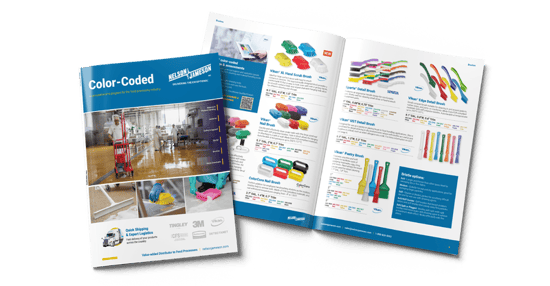
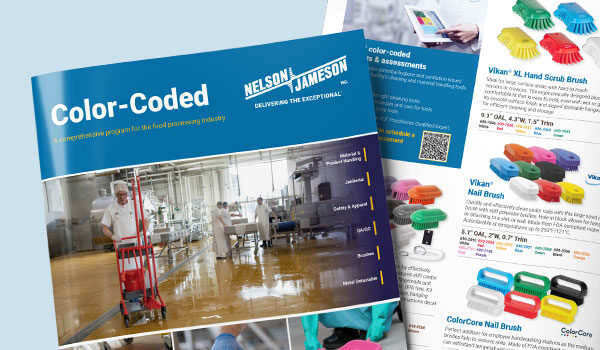
This is a comprehensive program for the food processing industry. Nelson-Jameson brings together the most extensive collection of color-coded products for material handling, product handling, janitorial, safety, apparel, QA/QC, and metal-detectable applications. With the right pieces, a color-coding system is a powerful tool in preventing cross-contamination of allergens and food-borne illnesses that can lead to sickness or expensive product recalls.

Color-Coded-Catalog_Open-Magazine-Mockup-1-1

Food Safety, Sanitation, Cleaning Tools, Color Coding

Webinar
Protecting the Food Supply: How to Harness Industry Resources for Food Safety Excellence

Protecting the Food Supply: How to Harness Industry Resources for Food Safety Excellence

Food safety is crucial in protecting consumers, and understanding how to ensure your program scales alongside your business is crucial in maintaining success. A program isn’t merely a matter of compliance; food safety is an ongoing initiative that must meet current demands and proactively stay ahead of emerging challenges.

Food Safety

Workshop
Neogen® Petrifilm® Certification Workshop

Neogen® Petrifilm® Certification Workshop

Get Petrifilm Certified through our complimentary immersive workshop for managers, personnel, and teams. The workshop offers practical knowledge through hands-on training and networking with industry professionals and experts. Attendees gain an in-depth understanding of Petrifilm technology and valuable insights into effective environmental monitoring practices.  Participants leave with a certification and a wealth of resources that can significantly contribute to elevating their plant's quality control standards.

Food Safety, Sanitation, Laboratory