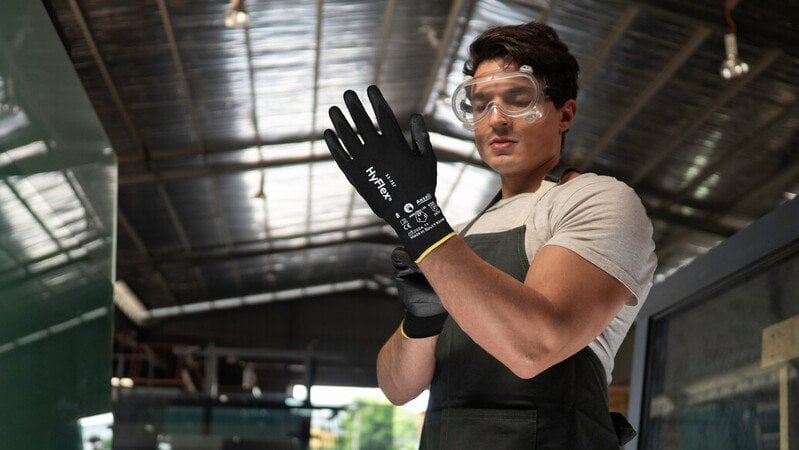
Wash, Reuse, Protect: Optimizing PPE Investment Through Launderability

November 24, 2025
Ansell

Food manufacturers are continuously challenged to balance rigorous infection control standards with increasing pressures to optimize costs and minimize environmental waste. In environments where mechanical gloves and protective clothing are necessary to protect against hazards like cuts and abrasions, reusable PPE provides a strategic advantage. Ansell, as a global provider of safety solutions, recommends embracing launderability as a core strategy for achieving cost-effectiveness and environmental sustainability.

Upgrade your PPE

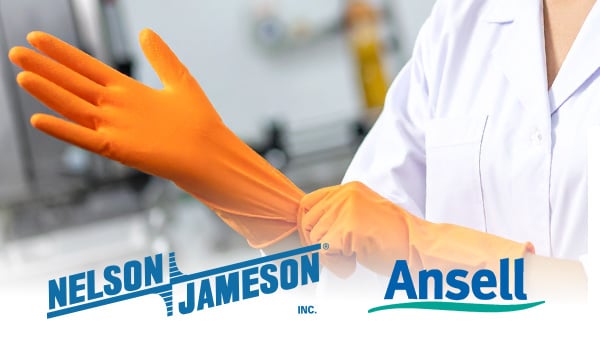
Check out the Ansell selection of gloves offered by Nelson-Jameson for your food manufacturing facility. 
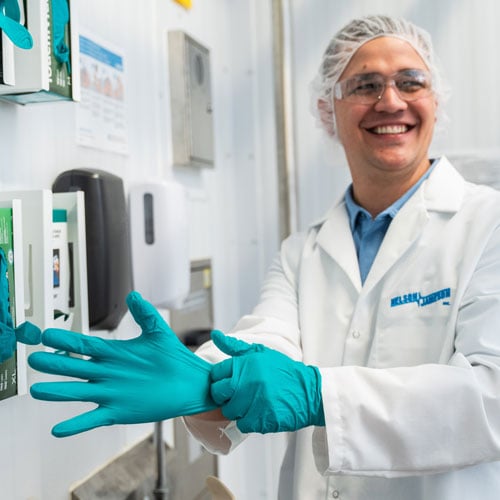
Adam-Monson-putting-on-a-pair-of-gloves-smiling-off-screen-2

The triple benefit of cleaning and reusing PPE

The decision to clean and reuse appropriate PPE, such as certain HyFlex® gloves is rooted in three key benefits:

  1. Resource conservation and cost-effectiveness: While reusable PPE may have higher upfront costs, its durability reduces the need for frequent replacements, leading to long-term savings. This approach ensures a continuous supply and conserves valuable resources.
  2. Environmental sustainability: Washing and reusing PPE significantly minimizes waste, which contributes positively to environmental sustainability. Ansell is committed to making a positive difference for both people and the planet, offering high-performance PPE through initiatives like Ansell Earth, which is designed with sustainability in mind.
  3. Infection control: Properly cleaning and disinfecting PPE helps eliminate harmful microorganisms, thereby reducing the risk of infection.

Ensuring proven performance through international standards

To ensure that safety is never compromised, Ansell follows International Standards, which specify the correct washing procedures for mechanical PPE. These standards provide the basis for determining a glove’s performance after laundering:

  • ISO 6330: This standard specifies the procedures for domestic washing and drying for textile testing. Washing is typically done at 104°F (40°C) and tumble-dried at 122°F (50°C).
  • ISO 15797: This standard specifies test procedures and equipment for evaluating workwear intended for industrial laundering. Industrial washing is typically performed at 140°F (60°C) and tumble-dried at 140°F (60°C).

Understanding and implementing launderability claims

Ansell’s tests verify the performance of unused gloves after laundering. For certain mechanical gloves, the "3X" symbol applies, meaning the glove's performance will not be reduced after 3 laundering cycles.

For example, various HyFlex cut and multi-purpose styles, such as the 11-561 and 11-581, have been confirmed as 3X washable through both domestic and industrial methods, utilizing the Standard washing - Synthetics program.


Nelson-Jameson & Ansell: Your partners in helping protect employees

At Nelson-Jameson, we deliver solutions, not just products. We understand the unique challenges of food manufacturing and are dedicated to helping you create a safer, more compliant workplace. We can assist you in selecting the right Ansell PPE for your specific plant needs.


 

Related: Begin your AnsellGUARDIAN® Hazard Analysis here >

Ansell

Recent posts

Food Safety

February 11, 2026

Hand Protection: A Crucial Line of Defense for Food Safety

There is a critical link between worker safety and food safety, and nowhere is this more apparent than w...

Food Safety

February 3, 2026

A Deep Dive into Environmental Monitoring & Safety Protocols

Ensuring the safety and quality of dairy products requires a robust framework combining rigorous testing...

Food Safety

January 12, 2026

Combine Superior Cut and Chemical Protection with AlphaTec 58-835

Gloves can force a choice between comfort and protection. But compliance, efficiency in usage, and worke...

Related resources

Webinar
Analyzing Hazards and Innovative PPE for Food Manufacturing

Analyzing Hazards and Innovative PPE for Food Manufacturing

Failure to effectively identify and anticipate workplace hazards is a leading cause of worker injury, with recorded cases numbering in the millions each year. A leading cause is inadequate PPE for workers’ hands, which introduces hidden costs that impact both employee well-being and the bottom line.

Investing in quality PPE instantly improves organizational efficiency, reduces waste, and minimizes needed recovery time. Incorporating a process to increase hazard recognition is a critical step to establishing effective health and safety procedures.

Discover the true cost of inadequate protection and how to identify safety hazards in order to minimize workplace risks and increase productivity.

Worker Safety

Webinar
Worker Safety is Food Safety: Meeting New Standards to Protect Your Consumers and Brand

Worker Safety is Food Safety: Meeting New Standards to Protect Your Consumers and Brand

With existing and emerging threats, food safety has never been more important to food manufacturers in protecting their consumers and their organization. Worker safety is closely tied to food safety, and utilizing robust worker safety measures and high-quality Personal Protective Equipment (PPE) is essential. In food manufacturing, accidents aren’t just safety incidents; they can set off a domino effect, creating risks to consumers and brands.

Worker Safety

Assessment
AnsellGUARDIAN Safety & PPE Hazard Analysis

AnsellGUARDIAN Safety & PPE Hazard Analysis

Each complimentary AnsellGUARDIAN® assessment is tailor-made to meet your specific safety & PPE objectives, whether that be for a single application or an entire facility. You will receive best practice recommendations to optimize your PPE dispensing and advise on business performance improvements.

What you’ll get:

  • Personalized risk management solutions to improve worker safety, increase regulatory compliance, and reduce injuries.

  • Guidance to reduce the cost of ownership.

  • Best practices to optimize employee performance and productivity.

How it's done:

  • Field experts observe each application, utilizing the provided data and a proven process to deliver a customized, tailor-made assessment.

  • The assessment employs a three-step approach: analysis, implementation, and improvement.

  • A simple process focuses on the most relevant areas to deliver the appropriate safety solution.

Worker Safety

Program Catalog
3M™ Safety Products Catalog

3M™ Safety Products Catalog

Employees are your greatest asset, protect them with 3M Safety Products.

Worker Safety