Fluid-handling systems in food and beverage manufacturing and dairy processing plants rely heavily on automated valve networks to maintain process integrity and hygiene. Still, hundreds of facilities nationwide continue to operate with aging valve automation hardware that threatens daily production continuity and uses an excessive amount of resources.
Recently, Curtis Hardy of Nelson-Jameson and Sheldon Young of Alfa Laval participated in a webinar titled Frictionless Upgrades: Modern Valve Control Tops with Next-Gen Efficiency. The panelists fielded questions from plant managers, maintenance directors, and food/dairy processing engineers about the operational risks of legacy hardware, retrofitting to next-generation valve control tops, and the ROI and resource sustainability of the modern valve control tops. We’ve rounded up the questions and shared some of the answers from the session!
Why is replacing legacy ThinkTop Classic control tops an urgent operational priority right now?
The Alfa Laval ThinkTop Classic served as an industry standard for valve automation for decades. However, maintaining these aging units now poses severe operational and supply chain risks to processing facilities:
- Official End-of-Life Status: The ThinkTop Classic reached official end-of-life status when manufacturing was phased out. Alfa Laval has halted production of original-equipment-manufacturer spare parts, including internal circuit boards and solenoids.
- Severe Supply Chain Vulnerability: Because factory OEM parts are no longer manufactured, facilities attempting to maintain legacy units are forced to rely on secondary markets (such as used equipment brokers) or search through dwindling regional warehouse inventories. Sourcing basic components requires excessive procurement labor and leaves plants vulnerable to extended, unmanaged downtime.
- Costly Unplanned Downtime: A single control top failure can disrupt automated processing sequences, triggering unscheduled batch dumps, CIP feedback errors, quality assurance (QA) compliance failures, and extended production delays. The financial loss from a single unannounced failure frequently exceeds the capital investment required to proactively modernize the entire valve manifold.
What does a facility sustainability and valve optimization assessment require from a plant team?
Executing a successful facility assessment requires clear cross-functional coordination between plant leadership and technical specialists. The process moves through four structured phases:
- Cross-Functional Teamwork: Plant management must align operations, maintenance, and production teams to identify known operational friction points, recurring alarms, high-risk valve clusters, and facility sustainability goals.
- Plant Walkthrough: Technical specialists conduct an on-site audit of valve matrices, manifolds, and piping infrastructure to discover hidden efficiency levers, evaluate physical spatial constraints, and note potential application risks.
- Essential Facility Data: The plant team gathers exact operational metrics needed to establish baseline utility and resource costs across production lines.
- ROI Modeling: Raw field metrics are converted into a detailed business case that highlights precise resource reductions, utility cost savings, and payback timelines to secure capital approval.
Technical Tip: Accurate facility data is required for precise financial modeling. Plant teams should collect exact operational metrics prior to the audit, including total valve counts, operating line pressures, process fluid temperatures, line flow rates, unit water costs, chemical costs, natural gas/boiler energy costs, and municipal wastewater treatment fees or surcharge rates.
How can process plants accurately measure or estimate their current CIP fluid waste?
Facilities can evaluate Clean-In-Place (CIP) seat-cleaning fluid consumption through two primary analytical methods:
- Analytical Estimation: Calculating fluid volume loss mathematically using internal pipe diameters, line operating pressures, flow rates, and programmed valve stroke durations.
- Physical Bucket Test: Placing a 5-gallon bucket directly beneath a valve's drain port during an active CIP seat-lift pulse to physically measure the volume discharged per event. This baseline figure is then multiplied across daily seat-lift pulses and total manifold valve counts.
Legacy ThinkTop Classic tops rely on basic PLC timer commands, holding seat-lifts open for fixed, continuous durations while fluid pours directly to the drain. In contrast, modern ThinkTop V50 and V70 units utilize intelligent pulse-and-burst seat-cleaning logic.. By physically validating valve position and executing rapid, high-impulse seat movements, modern control tops reduce CIP seat-cleaning liquid usage by 90% to 95%.
How is ROI calculated across water, chemicals, energy, wastewater fees, and municipal penalties?
Calculating the financial return on a control top upgrade involves measuring direct operational expenditure reductions across five key financial and operational categories:
- Water & Chemicals: Direct reduction in total gallons of fresh water, caustic, and sanitizer consumed during daily CIP seat-cleaning routines.
- Boiler Thermal Energy: Heating less CIP media directly lowers natural gas demand. Raising CIP liquid temperatures from a standard baseline (e.g., 55°F to 150°F+) requires approximately 750 BTUs per gallon. Reducing fluid volume lowers boiler fuel consumption and greenhouse gas (GHG) emissions.
- Wastewater Fees & Processing: Lowering discharge volume decreases hydraulic loading on onsite wastewater treatment facilities or Publicly Owned Treatment Works (POTWs). It also lowers costs associated with chemical pH neutralization, volume surcharges, and treatment sludge disposal.
- Fine Avoidance & Risk Mitigation: Minimizing wastewater discharge volumes and avoiding chemical pH spikes eliminates costly municipal overuse penalties and environmental non-compliance fines, such as Clean Water Act violations.
- Resource Scarcity Risk: Beyond immediate line-item savings, proactive water reduction serves as a critical risk-mitigation strategy for plant continuity. With six U.S. states currently facing severe water availability crises and municipal utility surcharges increasing annually, lowering water dependence insulates facilities against regulatory restrictions and escalating utility rates.
What PLC programming and mechanical changes are needed when retrofitting to ThinkTop V50 or V70 units?
Transitioning from legacy ThinkTop Classic units to modern ThinkTop V50 or V70 control tops is engineered to eliminate technical friction, downtime, and extensive automation rewiring.
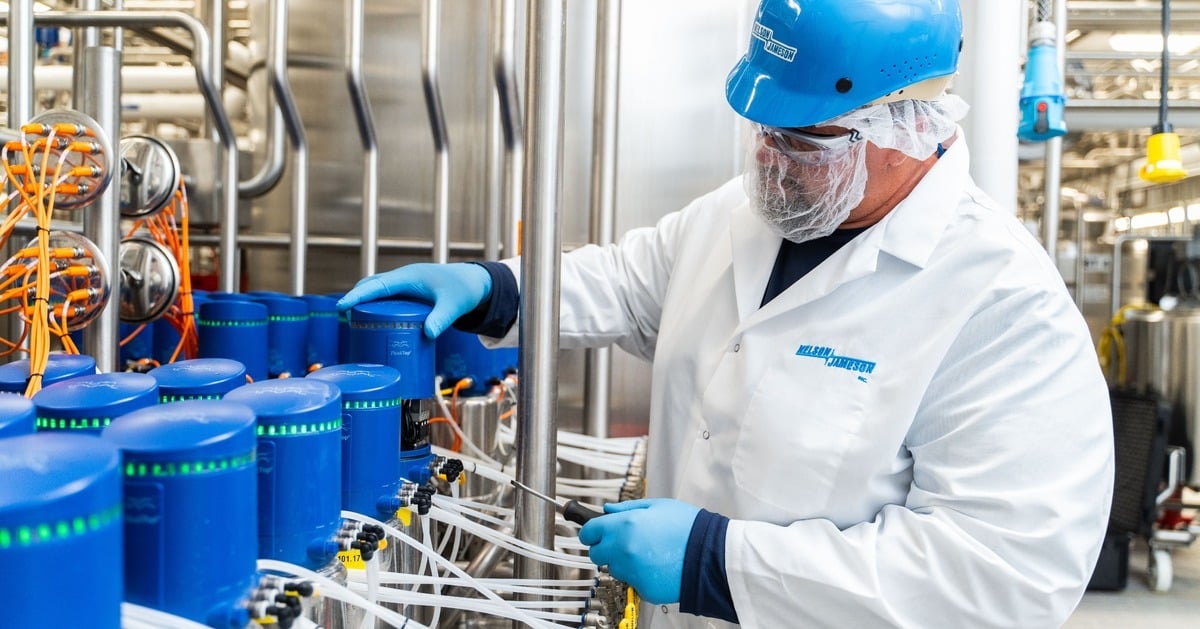
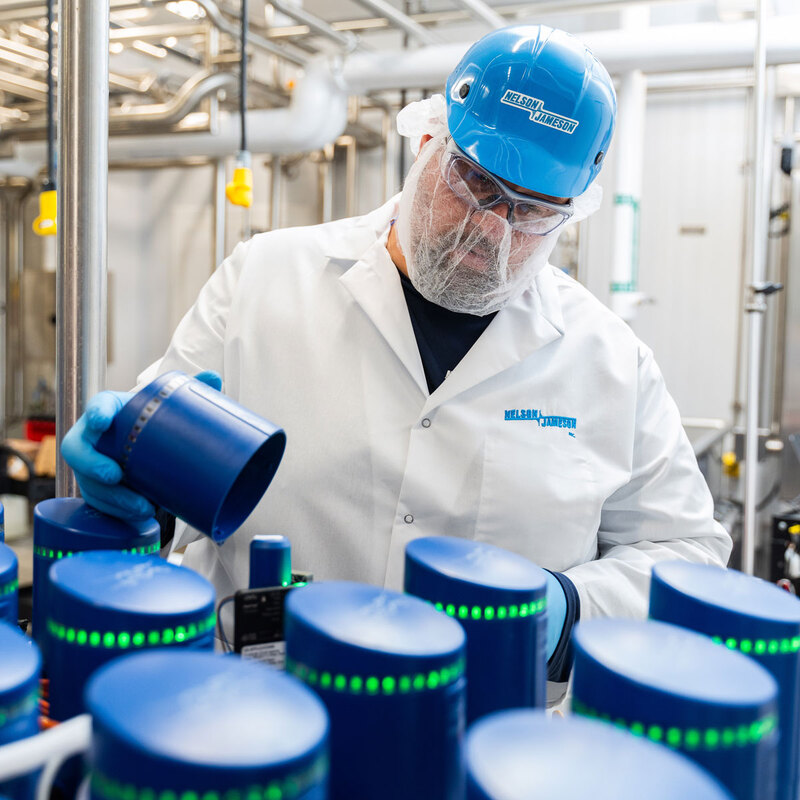
- Zero-Disruption Retrofit: Units feature a direct 1-to-1 mechanical fit onto existing Alfa Laval valves and actuators. They fully reuse existing pneumatic airlines and support standard communication protocols, including AS-Interface (AS-i), IO-Link, and Direct 24V Digital options. Reach out to learn more about your facility’s hardware.
- PLC Code Adjustments: No complete control system overhaul is needed. Integrating the new hardware requires simple bit-mapping adjustments (copy-and-paste logic) within the existing PLC code to align solenoid bit firing orders.
- Hardware, Software, and Diagnostic Improvements: Learn about the new hardware here.
What options exist for indication-only tops, high-heat CIP applications, and recycling legacy hardware?
High-Heat Environments
Standard ThinkTop V50 and V70 models are engineered to operate reliably in high-temperature processing environments. They are fully rated to withstand aggressive hot-wash routines and thermal CIP cycles, making them ideal for beverage, pasteurizer/HTST, and dairy manufacturing lines.
Sustainability & Legacy Recycling
To support circular manufacturing and sustainable waste management, Alfa Laval operates a control top recycling program. Plant teams can collect decommissioned ThinkTop Classic units during retrofits and return them for reprocessing, where raw materials are recovered and repurposed for manufacturing new units.
Partnering for a Seamless Upgrade
Modernizing legacy valve control hardware transforms an increasing operational risk into a measurable business advantage. Upgrading to ThinkTop V50 and V70 control tops bridges the gap between sustainability targets, plant productivity, and bottom-line profitability by eliminating obsolete hardware, preventing unplanned downtime, and drastically lowering CIP utility expenses.
The Next Steps for Your Plant
- Audit Existing Assets: Compile a full inventory of legacy control tops currently running across all process lines and utility blocks.
- Identify Critical Risk Points: Prioritize high-duty valve manifolds, HTST/pasteurizer circuits, and critical CIP lines vulnerable to single-point component failures.
- Gather Facility Baseline Data: Collect current operational metrics, including chemical costs, thermal utility rates, municipal wastewater surcharges, and line operating parameters.
- Schedule a Consultative Assessment: Partner with technical specialists from Nelson-Jameson and Alfa Laval to execute an on-site facility audit, model potential ROI payback schedules, and build a tailored retrofit plan.
- Leverage Turnkey Lifecycle Support: Utilize Nelson-Jameson’s SupplyRITE inventory buffer program to guarantee stock availability, and enroll maintenance personnel in Factory-Certified Hands-On Valve Training Workshops to ensure zero-disruption retrofits during upcoming planned turnarounds.